A physical object can be documented in several ways, but turning it into a useful digital model requires more than taking a few photographs. Engineers may need accurate dimensions, architects may want to preserve the appearance of a historic building, and product designers may need a digital reference for an existing component. Two common approaches are 3d scanning and photogrammetry. Both can reconstruct real objects digitally, but they collect information in different ways.
Understanding the difference helps prevent a common mistake: choosing a method because it looks convenient, rather than because it suits the final purpose. The right choice depends on the subject, the required level of detail, the available equipment, and what you plan to do with the resulting model.
Two Methods, Two Different Ways of Seeing an Object
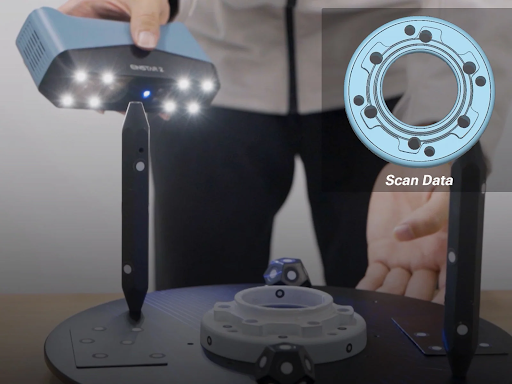
3D scanning uses a dedicated device to capture the geometry of a physical subject. Depending on the technology, it may use laser light, structured light, infrared sensing, or another depth-measuring approach. The scanner records information about the object’s shape and produces data that can be processed into a three-dimensional model.
Photogrammetry takes a different route. It uses multiple photographs taken from different positions. Software identifies matching visual details across the images and uses those correspondences to estimate the subject’s shape and position in three-dimensional space. The distinction is important. A scanner is designed specifically to collect spatial information, while photogrammetry builds its reconstruction from photographic evidence. Neither method is automatically better in every situation.
When Measured Geometry Matters Most
Imagine a workshop that needs to reproduce a discontinued machine component. The original part may have curved surfaces, irregular edges, and dimensions that are difficult to measure with ordinary tools. In this situation, capturing its geometry is a major priority. A suitable scanner can collect surface data from several angles, giving the operator a digital representation that can support inspection, reverse engineering, or further CAD work. The usefulness of the result still depends on the scanner’s capabilities, the object’s size and material, and how carefully the capture is performed.
This is one area where dedicated 3D scanning can be especially practical. It is often preferred when the project depends on dimensional information rather than appearance alone. Manufacturers, product developers, repair specialists, and designers may use scanning as part of a wider process for studying existing objects. However, a scan is not automatically a finished engineering model. The captured data may need alignment, cleaning, measurement checks, and conversion into editable CAD geometry.
When Photographs Offer the Better Starting Point
Now consider a different assignment: documenting a historic building with detailed stonework, decorative surfaces, and a wider surrounding landscape. A camera-based approach may be a sensible starting point because the project involves large areas and visible detail. Photogrammetry can be useful for capturing buildings, sculptures, archaeological sites, terrain, and other subjects where photographic coverage is practical. A camera may already be available, and the same image collection can preserve surface appearance as well as support a 3D reconstruction.
But the process has its own requirements. Images need sufficient overlap, consistent visual detail, and suitable coverage from different angles. Plain, reflective, transparent, or repetitive surfaces can make it harder for software to identify reliable matching points. Moving subjects and changing light conditions may also affect the results. Photogrammetry is therefore not simply a matter of uploading random pictures. Careful image capture and suitable processing software are essential.
3D Scanning vs Photogrammetry: The Questions That Decide
The comparison becomes clearer when the project requirements are considered individually.
Dimensional reliability: If measurements and physical geometry are central to the task, a suitable 3D scanner may provide a more direct route. Photogrammetry can also produce accurate models, particularly when the process is carefully calibrated and supported by reference measurements, but accuracy should never be assumed without validation.
Surface appearance: Photogrammetry has an advantage when photographs and visible textures are important to the result. Some scanning workflows also capture colour information, although the quality and availability of this feature depend on the equipment.
Object size: Small mechanical components, human-sized subjects, vehicles, buildings, and landscapes present different challenges. The working range and capture method matter more than the general label attached to a device.
Budget and accessibility: Photogrammetry can be an attractive entry point for someone who already owns a capable camera. Dedicated scanners require an equipment investment, but they may make certain technical capture tasks more straightforward. A cheap setup is not necessarily economical if it repeatedly produces data that cannot meet the project’s needs.
Working conditions: Lighting, surface material, movement, access, and available space can influence either method. A realistic test on a representative subject is more useful than relying only on advertised specifications.
Why Some Projects Benefit From Using Both
The two methods do not have to compete. In certain workflows, they can complement one another. For example, a scanner could capture the geometry of a component while photographs provide additional visual reference. In heritage documentation, different capture techniques may be combined to record detailed objects alongside larger surroundings. The resulting datasets can then be aligned or used for separate purposes, depending on software compatibility and project requirements.
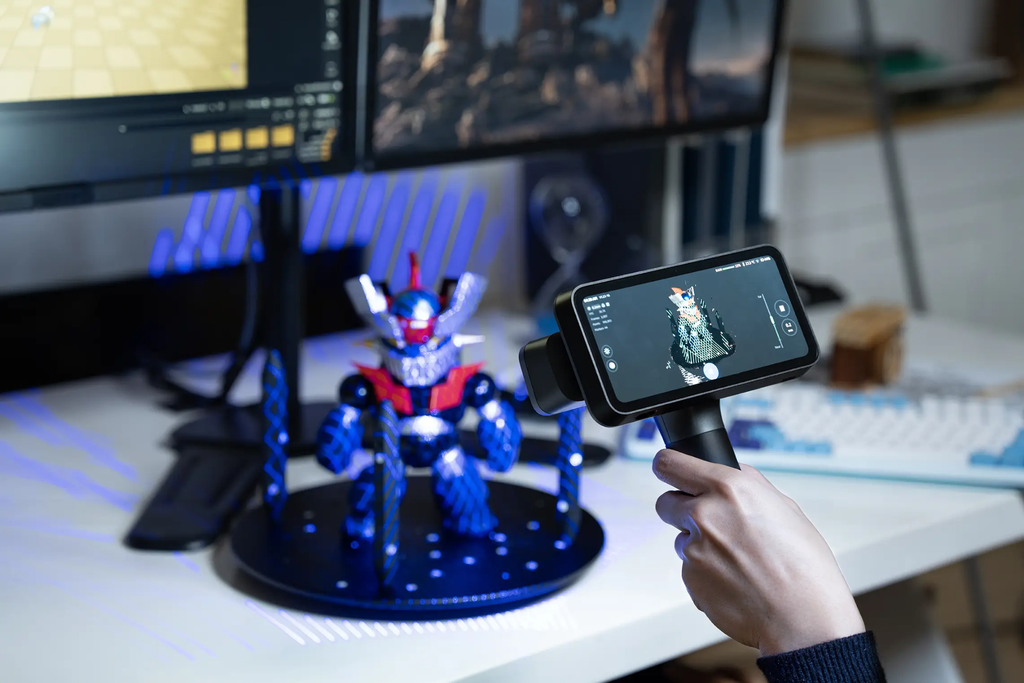
Equipment choices should reflect these practical needs. When evaluating 3d scanning vs photogrammetry, consider which approach better suits the subject, required accuracy, and intended outcome. Manufacturers such as EINSTAR offer dedicated 3D scanning options for users exploring digital capture, but the appropriate device still depends on the project. It is worth reviewing supported object sizes, capture modes, software features, and export options before making a decision.
Final Thoughts
3D scanning and photogrammetry both turn real-world subjects into digital representations, but they approach the task from different directions. Scanning is often a strong choice when capturing geometry is the main objective, while photogrammetry can be particularly useful when photographic coverage and surface appearance matter. The best method is the one that matches the project’s requirements, not necessarily the one with the most impressive technical description. Before choosing, define what the model must achieve. A little planning at this stage can save time, reduce unnecessary equipment costs, and produce digital results that are genuinely useful.
Frequently Asked Questions
Is 3D scanning more accurate than photogrammetry?
Not in every situation. Accuracy depends on the equipment, calibration, capture conditions, processing method, and validation process. A suitable scanner may be preferable for certain measurement-focused tasks, while carefully controlled photogrammetry can also deliver accurate results.
Can photogrammetry create models for 3D printing?
Yes. Photogrammetry software can generate 3D meshes that may be prepared for printing. The model should be checked for holes, irregular geometry, scale, and other mesh issues before production.
Does photogrammetry require a professional camera?
Not always. Some projects can be completed with a capable consumer camera or smartphone. However, image quality, lens consistency, focus, and adequate photographic coverage can influence reconstruction results.
Which method is better for mechanical parts?
A suitable 3D scanner is often a practical option when the goal is to capture component geometry for inspection or reverse engineering. The best choice still depends on part size, surface properties, and required precision.
Can 3D scanning and photogrammetry be used together?
Yes. They can provide complementary information in projects where both geometric data and photographic detail are valuable, provided the captured datasets can be aligned and processed appropriately.
Read more: https://grammarexparts.com/other-ways-to-say-please-accept-my-apology/
https://grammarexparts.com/other-ways-to-say-infectious-smile/
https://grammarexparts.com/other-ways-to-say-as-per-your-request/