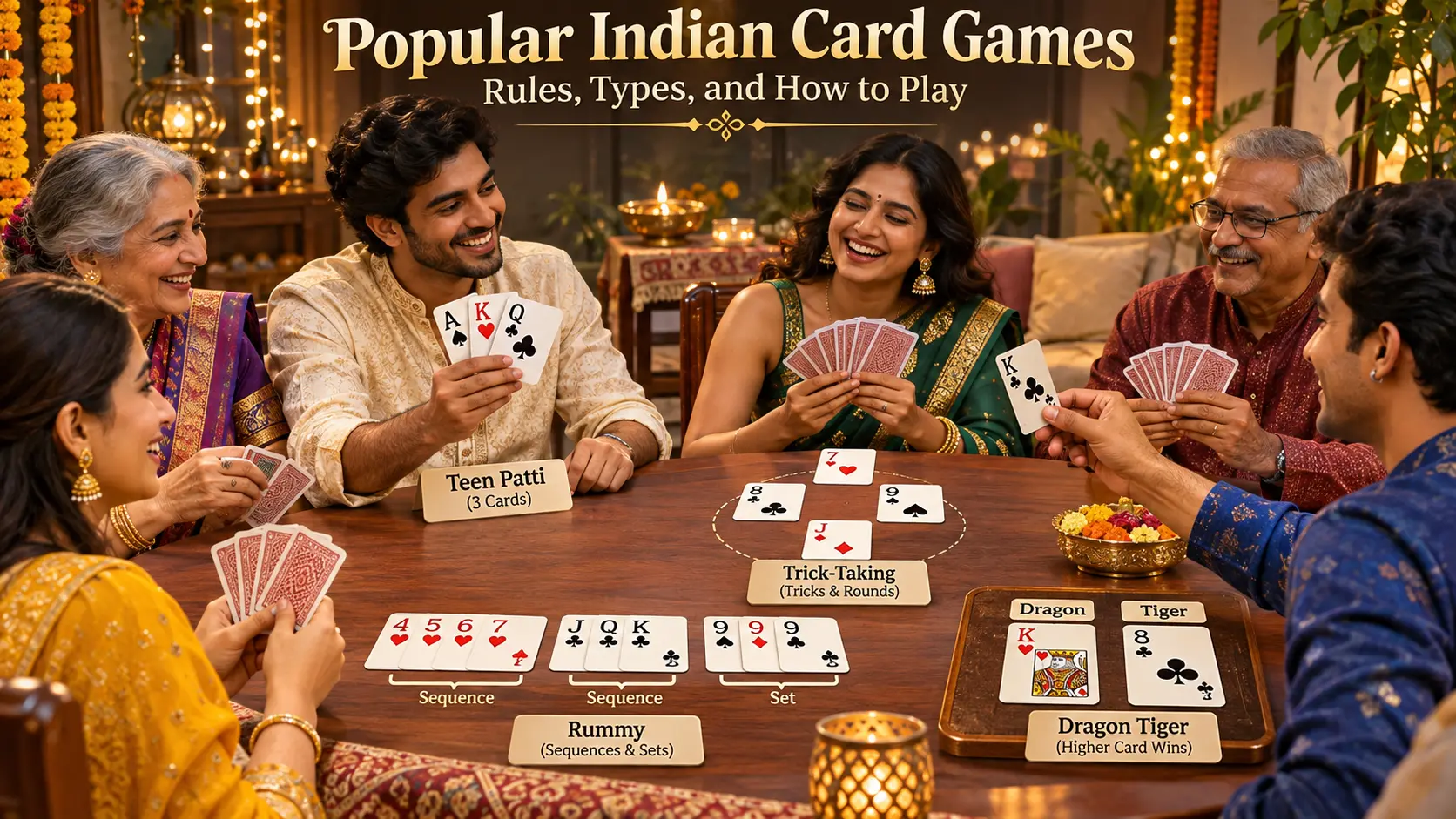
Card games have been part of Indian social life for generations. Families play them during festivals, friends enjoy them at gatherings, and many people learn their first card game at home. Some games need careful planning, while others depend on simple rules and luck. The most popular Indian card games include Teen Patti, Rummy, Andar Bahar, Call Break, and Twenty-Nine. Modern casino formats have also gained attention. For example, the dragon tiger real cash game is based on comparing two cards rather than building a hand or winning tricks. Each game has its own objective, card rankings, and scoring system. This guide explains how popular card games played in India work, what makes them different, and which ones are suitable for beginners.
What Are the Most Popular Card Games in India?
Popular Indian card games include Teen Patti, Indian Rummy, Andar Bahar, Call Break, Twenty-Nine, Court Piece, and Seep. These games use standard playing cards but follow different rules. Some involve forming combinations, while others focus on collecting cards or winning tricks. India also has many regional card games with different names and local variations. A game played in one state may have slightly different scoring rules in another.
| Card Game | Typical Players | Main Objective | Game Type |
| Teen Patti | Usually 3–6 | Form the strongest three-card hand | Hand comparison |
| Indian Rummy | 2–6 | Form sequences and sets | Matching and melding |
| Andar Bahar | Multiple participants | Predict which side receives a matching card | Chance-based |
| Call Break | 4 | Win the declared number of tricks | Trick-taking |
| Twenty-Nine | 4 | Collect valuable cards with a partner | Partnership |
| Court Piece | 4 | Win tricks using a trump suit | Partnership |
| Seep | Usually 4 | Capture cards and collect points | Card capturing |
| Dragon Tiger | Multiple participants | Predict the higher card | Card comparison |
Teen Patti and Rummy are among the most familiar names. Call Break and Twenty-Nine are common choices for four-player groups, while Andar Bahar has simple rules that are easy to learn.
Teen Patti: One of India’s Best-Known Card Games

Teen Patti means “three cards” in Hindi. It is a well-known Indian card game often associated with Diwali celebrations and gatherings with friends. The game uses a standard 52-card deck and is commonly played with three to six people, although larger groups are possible. Teen Patti has also appeared in digital formats. One example is the https://indian.1xbet.com/en/slots/game/189368/teen-patti listing, which shows how the familiar name is used in online gaming. However, digital casino versions may follow different rules from traditional Teen Patti played at home.
Basic Teen Patti Rules
Each player receives three cards. The objective is to hold the highest-ranking hand or remain in the round after other players fold. Traditional Teen Patti uses six main hand rankings.
| Hand | Example | Meaning |
| Trail | A♠ A♥ A♦ | Three cards of the same rank |
| Pure sequence | 7♥ 8♥ 9♥ | Three consecutive cards of the same suit |
| Sequence | 5♣ 6♦ 7♥ | Three consecutive cards of mixed suits |
| Colour | 2♠ 8♠ K♠ | Three cards of the same suit |
| Pair | Q♥ Q♣ 4♦ | Two cards of the same rank |
| High card | A♠ J♥ 7♦ | No stronger combination |
A trail is the highest category, followed by a pure sequence. A pair beats a high-card hand but loses to a colour. Groups can learn the rankings using points or non-monetary tokens rather than playing for money.
Why Teen Patti Is Popular in India
Teen Patti is easy to organize because it only requires one deck and a group of players. Each round uses three cards per person, so hand comparisons are quick. The game also has a strong social connection with Diwali and family gatherings. Many households have their own traditions for playing it. Beginners should learn the hand rankings before trying variations with additional rules.
Indian Rummy: Sequences, Sets, and Card Skills
Indian Rummy is one of the most recognized card games in India. It combines memory, card arrangement, and decision-making. The standard 13-card version requires players to build valid combinations by drawing and discarding cards. Unlike Teen Patti, the objective is not to hold the strongest three-card hand. Players must organize their cards into sequences and sets.
How to Play Indian Rummy
Each player receives 13 cards. The remaining cards form a draw pile, while a separate pile holds discarded cards. During a turn, a player draws one card and discards another. The aim is to arrange the hand into valid groups. A winning declaration normally requires at least two sequences, including one pure sequence. A pure sequence contains consecutive cards of the same suit without using a joker as a substitute. For example, 4♥, 5♥, and 6♥ form a pure sequence. A set contains three or four cards of the same rank in different suits. For example, K♠, K♥, and K♦ form a valid set.
Popular Indian Rummy Variations
Indian Rummy has several common formats. Points Rummy usually consists of a single round. Players receive points based on their remaining cards. Pool Rummy continues across multiple rounds. Players accumulate penalty points and are eliminated after reaching a fixed limit, usually 101 or 201. Deals Rummy uses a fixed number of deals. The overall result depends on the scoring system used across those rounds. All three formats share similar rules for sequences and sets, but their scoring structures differ.
Andar Bahar: A Simple Indian Card Comparison Game

Andar Bahar is a traditional Indian game based on matching card ranks. It has fewer rules than Rummy or Teen Patti and does not require players to arrange their own hands. The game uses two sides called Andar and Bahar. A reference card determines which rank must appear to end the round.
Basic Andar Bahar Rules
At the beginning of a round, the dealer reveals a reference card. Suppose it is the 8♣. The dealer then places cards alternately on the Andar and Bahar sides according to the chosen version’s rules. The round ends when another Eight appears. The side receiving that card wins. Players do not need to form sequences, remember hand rankings, or make card-playing decisions. The dealing order and payout rules may differ between traditional and digital versions.
How Andar Bahar Differs From Rummy
Andar Bahar focuses on one matching card. Rummy requires players to form several valid combinations using 13 cards. In Rummy, players choose which cards to draw and discard. These decisions can affect the final result. In Andar Bahar, participants cannot control which cards appear. The outcome depends on the order in which the cards are dealt. This makes the basic gameplay easier to understand, although it does not make the result predictable.
Dragon Tiger: A Fast Card Comparison Game
Dragon Tiger is a simple card game found in casino settings, including live dealer formats. It is not generally considered a traditional Indian-origin game, but it is familiar to some Indian casino audiences. The game uses two positions called Dragon and Tiger. Each position receives one card, and the higher card wins. Unlike Teen Patti or Rummy, Dragon Tiger does not involve building combinations or choosing which cards to play.
How to Play Dragon Tiger
The dealer draws two cards from a shoe containing several standard decks. One card goes to Dragon, and the other goes to Tiger. The cards are compared by rank. In standard Dragon Tiger, Ace is the lowest card and King is the highest. For example, Dragon receives 9♠ and Tiger receives Q♥. Tiger wins because a Queen ranks higher than a Nine. Suits do not affect the standard comparison. A King of Hearts and a King of Spades have equal rank.
What Happens When Both Cards Have the Same Rank?
If both cards have the same rank, the result is a tie. For example, Dragon receives 7♣ and Tiger receives 7♦. Neither side has a higher card. Some casino versions return half of the original Dragon or Tiger stake when a tie occurs. Separate Tie wagers may follow different payout rules. The exact conditions depend on the provider and should be checked before participating.
Dragon Tiger vs. Teen Patti
Both games involve comparing cards, but their structures are different.
| Feature | Dragon Tiger | Teen Patti |
| Cards compared | One per side | Three per player |
| Main objective | Identify the higher card | Compare ranked hands |
| Main decisions | Select an outcome | Decide whether to continue or fold |
| Hand combinations | Not required | Required |
| Round complexity | Very simple | More detailed |
| Possible result | Dragon, Tiger, or Tie | Strongest hand or last remaining player |
Dragon Tiger depends mainly on chance. Teen Patti includes decisions about whether to remain in a round, although the cards themselves are randomly dealt. Neither game offers a reliable method for predicting future card results.
Call Break: A Popular Trick-Taking Card Game
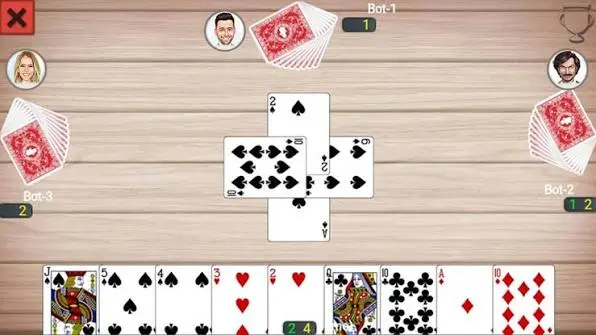
Call Break is commonly played by four people using a standard 52-card deck. It is popular in India, Nepal, and Bangladesh. The game belongs to the trick-taking category. Players compete individually and try to win the number of tricks they declared before play begins.
Basic Call Break Rules
Each player receives 13 cards. Before playing, everyone declares how many tricks they expect to win. A trick consists of four cards, one played by each participant. Players generally follow the suit led when possible. Spades serve as the permanent trump suit in common versions. A trump card can beat cards from other suits, subject to the applicable rules. The winner of a trick leads the next one.
How Call Break Scoring Works
Scores depend on whether players meet their declared number of tricks. Suppose a player declares four tricks and wins exactly four. They receive the score assigned to a successful four-trick call. Winning fewer tricks normally results in a penalty. Some versions award additional points for tricks won beyond the declaration. Because scoring systems differ, players should agree on the rules before starting.
Twenty-Nine: A Partnership Card Game
Twenty-Nine is a four-player trick-taking game played by two teams of two. It uses a reduced 32-card deck containing Sevens through Aces. Unlike most familiar card games, the Jack is the highest-ranking card, followed by the Nine.
Card Rankings and Gameplay
The ranking in each suit is Jack, Nine, Ace, Ten, King, Queen, Eight, and Seven. Players try to win tricks containing valuable cards. Jacks are worth three points, Nines are worth two, and Aces and Tens are worth one point each. Team members work together to collect enough points to meet their target.
Bidding and Scoring
Before play, participants bid for the number of points their team expects to win. The successful bidder’s team must reach its declared target. For example, a team that bids 18 must collect at least 18 card points under the applicable rules. If the team fails, it loses the deal according to the scoring system. Twenty-Nine rewards teamwork, careful card selection, and understanding which valuable cards may still be in play.
Court Piece and Other Regional Indian Card Games
India has many regional card games that are less familiar outside their local communities. Some use trump suits, while others focus on capturing specific cards or collecting points.
Court Piece
Court Piece, also known as Rang or Coat Piece, is commonly played by four people in two teams. It uses a standard deck, and one suit becomes the trump suit. Players try to win tricks by playing strong cards or using trumps when allowed. Common versions aim to win seven tricks in a deal, while some variations include additional conditions for winning a court.
Seep or Sweep
Seep is a card-capturing game played in parts of northern India. Players collect cards from the table by matching values or forming valid captures. The game uses a scoring system based on captured cards and special events. A sweep occurs when a player captures all the remaining cards on the table in one turn. This may award bonus points under the rules. Seep requires planning because players must consider both their own cards and the combinations available on the table.
Mendikot and Dehla Pakad
Mendikot and Dehla Pakad are related trick-taking games found in different parts of India. They commonly involve four players in partnerships. The objective often involves capturing Tens or meeting other trick-related conditions. Rules vary by region. Some versions use different methods for choosing the trump suit or deciding which team wins. These games show how card-playing traditions can change while retaining similar basic mechanics.
Indian Card Games for Different Numbers of Players

The number of available players is important when choosing a card game. Some games work with two people, while others require fixed partnerships.
| Number of Players | Suitable Card Games |
| 2 players | Indian Rummy, two-player card game variations |
| 3 players | Teen Patti, Teen Do Paanch |
| 4 players | Call Break, Twenty-Nine, Court Piece, Seep |
| 5–6 players | Teen Patti, Indian Rummy |
| Larger groups | Bhabhi and suitable group variations |
Four friends, for example, might choose Call Break if everyone prefers to compete individually. If they want to form two teams, Twenty-Nine or Court Piece may be more suitable. Rummy is useful when the group wants a game based on arranging cards rather than winning tricks. Player limits can vary, so it is worth checking the rules before dealing.
Skill-Based vs. Chance-Based Indian Card Games
Every card game involves uncertainty, but the amount of player control differs. Some games offer meaningful choices that influence performance. Others depend almost entirely on the order in which cards are dealt.
Card Games That Involve Planning
Rummy requires players to choose which cards to keep, draw, and discard. These decisions affect their chances of completing valid combinations. Call Break and Twenty-Nine involve trick-taking. Players must consider card rankings, trump suits, and the cards already played. Court Piece also rewards coordination between partners. Experience can improve decision-making, but it cannot control which cards are dealt.
Games Based Mainly on Chance
Andar Bahar and Dragon Tiger depend mainly on random card distribution. In Andar Bahar, the result depends on which side receives the next matching card. Dragon Tiger compares one card for each side. Participants cannot influence the card ranks. Remembering previous results does not reliably predict the next outcome.
Why Skill Does Not Guarantee Winning
Even experienced players can lose because of unfavorable cards. A skilled Rummy player may receive a difficult starting hand. A strong Call Break player may fail to meet a declared number of tricks. Good decisions can improve performance in games involving skill, but random card distribution still matters.
How Indian Card Games Are Played During Festivals and Family Gatherings
Card games are common during Indian family gatherings, holidays, and celebrations. Teen Patti is especially associated with Diwali. Friends and relatives often gather around a table to play several short rounds. Other households prefer Rummy, Call Break, or regional partnership games. These games do not need to involve real money. Players can use points, virtual tokens, or simple score sheets.
Choosing a Game for a Family Gathering
The best choice depends on the group. Teen Patti may suit people who want short rounds and simple hand rankings. Rummy is useful for players who enjoy arranging cards and making decisions. Call Break and Twenty-Nine are practical for groups of four. If some participants are new to cards, explain the objective and scoring rules before starting. A short practice round can help everyone understand the game.
Traditional Indian Card Games vs. Digital Versions
Many card games traditionally played with physical decks are now available in mobile and browser-based formats. The basic objectives may remain familiar, but the way players interact with the game can change.
Playing With Physical Cards
Physical card games allow groups to play face-to-face. Players can shuffle, deal, and agree on household rules before starting. This is particularly useful for regional games that have several variations. A standard deck also requires no internet connection or electronic device.
Digital Card Games
Digital versions can automate shuffling, dealing, card arrangement, and scoring. Some provide tutorials, practice rounds, or computer-controlled opponents. However, digital adaptations may use different rules or scoring systems. For example, a casino version of Teen Patti may involve comparing a player’s hand against a dealer rather than following the traditional multiplayer format. Always check the specific rules instead of assuming that every digital version matches the physical game.
Common Mistakes Beginners Make in Indian Card Games
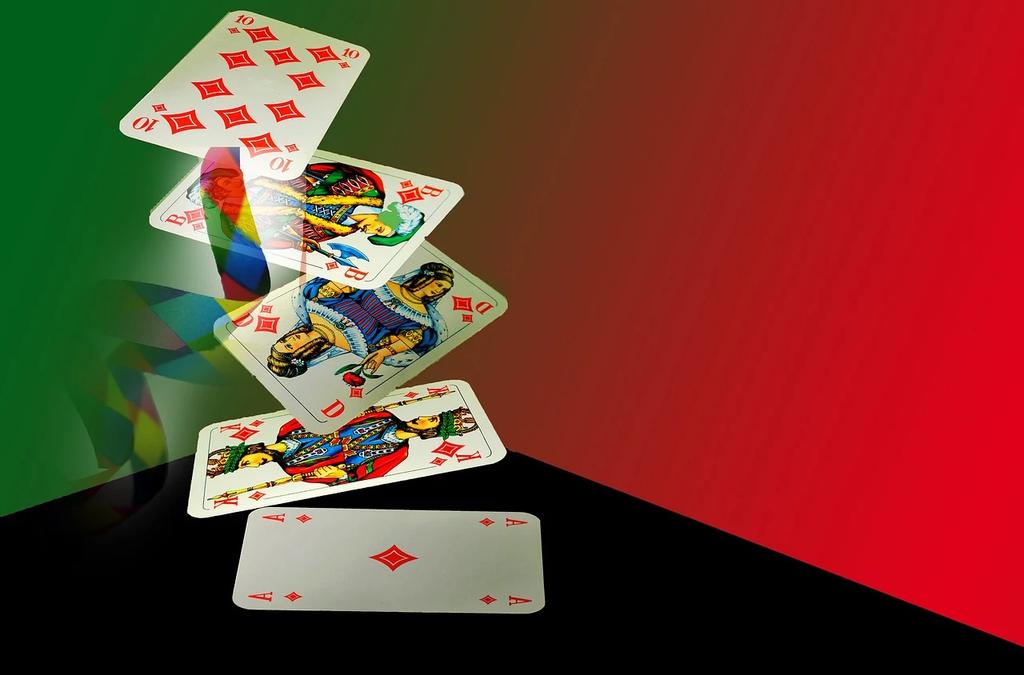
A common mistake is confusing the rules of different games. Teen Patti uses three-card hand rankings, while Indian Rummy requires valid sequences and sets. Learning one game does not mean all card games follow the same rules. Another problem is misunderstanding trump cards. In Call Break and Twenty-Nine, the trump suit can determine which card wins a trick. Beginners sometimes play a high card from another suit without considering this rule. Players may also assume that every version of a game uses identical scoring. Regional games often have local variations, and digital platforms may use different rules. Before starting, agree on the scoring system, card rankings, and any special conditions.
How to Learn Indian Card Games
Learning a new card game becomes easier when the rules are studied in a clear order. Start with the objective, then learn how cards are ranked and what decisions are available.
Start With the Basic Objective
First, identify what determines the winner. In Rummy, the aim is to complete valid sequences and sets. In Call Break, players try to win their declared number of tricks. In Dragon Tiger, the result depends on which side receives the higher card. Understanding the objective makes the remaining rules easier to follow.
Learn Card Rankings and Combinations
Card rankings change between games. An Ace may be high in Teen Patti but low in Dragon Tiger. In Twenty-Nine, Jacks and Nines rank above Aces. Create a small reference sheet if necessary. For games involving combinations, practise identifying pairs, sequences, sets, and other valid groups.
Practise With Free or Non-Monetary Games
A physical deck is enough to learn most traditional card games. Players can use a score sheet and complete several practice rounds without money. Free digital demonstrations may also help explain the rules, although their availability varies by game. Practice should focus on understanding the mechanics rather than trying to predict random outcomes.
Frequently Asked Questions About Popular Indian Card Games
What Are the Most Popular Indian Card Games?
Popular Indian card games include Teen Patti, Indian Rummy, Andar Bahar, Call Break, Twenty-Nine, Court Piece, and Seep. Each uses different rules and scoring methods. Some focus on hand combinations, while others involve trick-taking or card matching.
Which Card Game Is Traditionally Played During Diwali?
Teen Patti is strongly associated with Diwali celebrations in many Indian households. Friends and family members often play it during festive gatherings. However, traditions vary, and some families prefer Rummy or other card games.
Which Indian Card Games Are Easy for Beginners?
Teen Patti hand comparison and basic Andar Bahar rules are relatively easy to understand. Indian Rummy requires more practice because players must learn sequences and sets. The easiest choice depends on whether someone prefers simple comparisons or making decisions.
What Is the Difference Between Teen Patti and Rummy?
Teen Patti gives each player three cards and uses ranked combinations to compare hands. Indian Rummy normally gives players 13 cards and requires them to form valid sequences and sets through drawing and discarding. Their objectives and scoring systems are different.
Is Dragon Tiger an Indian Card Game?
Dragon Tiger is not generally classified as a traditional Indian-origin card game. It is a casino comparison game that is available in Indian casino settings. The rules involve comparing one Dragon card against one Tiger card, with the higher rank winning.
Which Indian Card Games Are Best for Four Players?
Call Break, Twenty-Nine, Court Piece, and Seep are suitable for four players. Call Break usually involves individual competition, while the other three commonly use partnerships. The best choice depends on whether the group prefers teamwork or individual scoring.
Can Indian Card Games Be Played Without Money?
Yes. Many Indian card games can be played socially using points, paper score sheets, or non-monetary tokens. This is useful for family gatherings and beginners who want to learn the rules without financial risk.
Conclusion
India has a wide variety of card games, from familiar favorites such as Teen Patti and Rummy to regional games such as Court Piece, Seep, and Twenty-Nine. Each game offers a different challenge. Rummy focuses on sequences and sets, while Call Break and Twenty-Nine involve trick-taking. Simpler comparison games, including Dragon Tiger, rely more heavily on chance. The best way to learn any card game is to understand its objective, card rankings, and scoring rules. With a standard deck and a little practice, many of these games can be enjoyed as part of a social gathering.
Also Read
- https://grammarexparts.com/a-guide-to-jm8-games-exploring-online-gaming-categories-and-platform-features/
Cooling a Yoga or Meditation Room Without Noise or Harsh Drafts
https://grammarexparts.com/modern-lifestyle-trends-that-are-changing-the-way-people-spend-their-free-time/