Players happily spend hundreds on graphics and then listen through whatever came in the box. It is a strange imbalance, because sound does at least as much work as the picture — it just does it in the background, where it rarely gets credited. Good game audio does two jobs at once: it tells you things the screen cannot, and it makes the world on that screen feel like a place instead of a slideshow.
Ask any experienced player about their most memorable moments and sound is hiding inside most of them: the sting when an enemy appears, the hush before a boss door, the distant gunfire that rerouted an entire squad. None of that lands through a rattling laptop speaker.
Sound is information
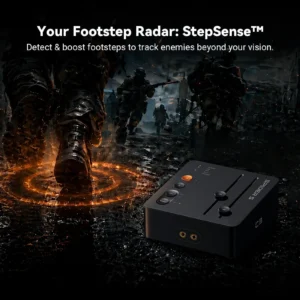
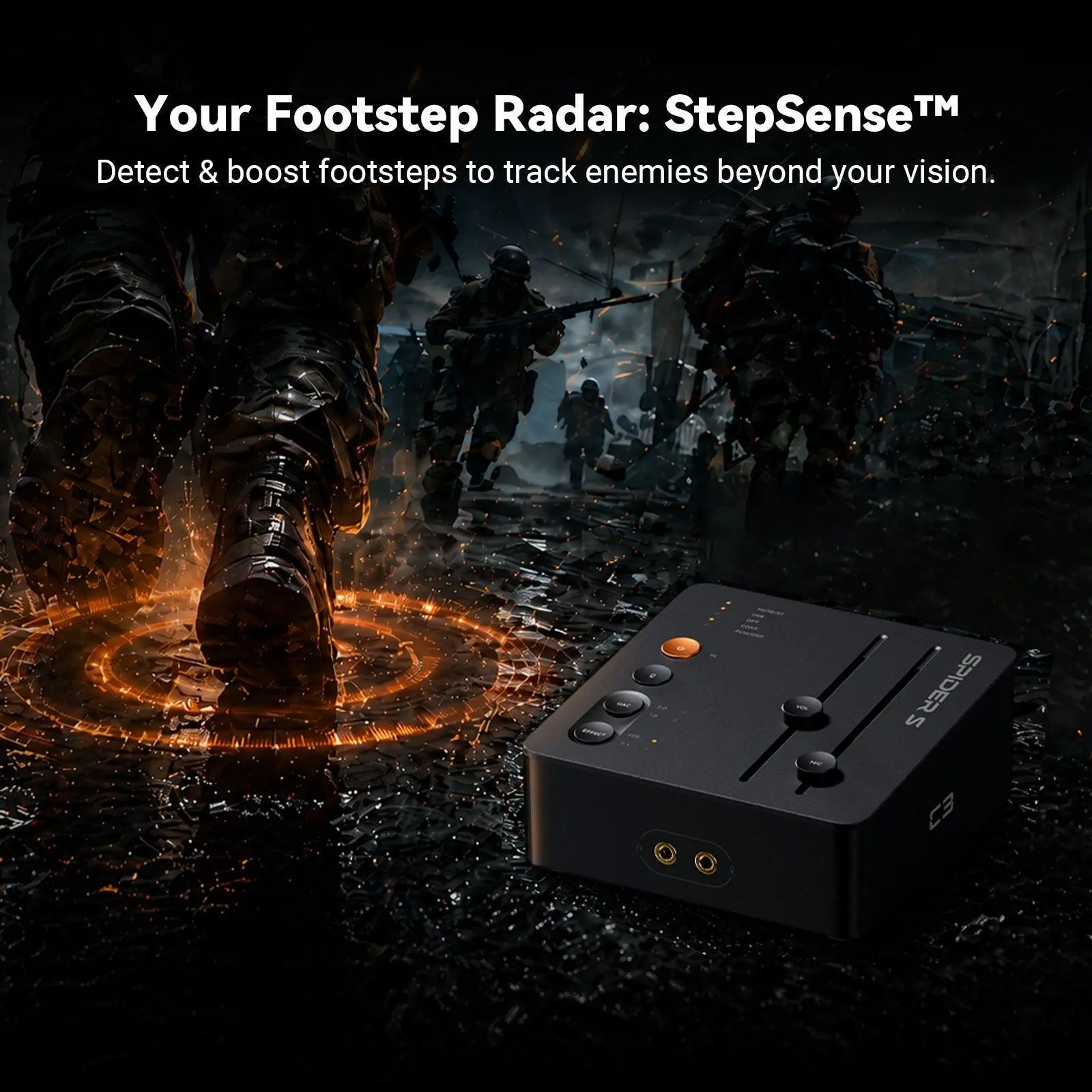
Your screen shows you a slice of the world, maybe a hundred degrees of it. Sound covers the full circle, including everything behind you. Footsteps on gravel versus wood, a reload around a corner, an ultimate ability charging off-screen, rain arriving before the storm is visible — the mix is constantly reporting events your eyes have not caught yet. Competitive players treat game audio as a second minimap for exactly this reason, and in slower genres it is no less useful. Horror games are almost dishonest without it; the genre is half sound design, and playing one muted is reading a novel with the adjectives removed.
Sound is atmosphere
The other job is emotional. A score that thins out as you enter a dangerous valley, tavern chatter that swells as you push through a door, the weight of a sword that actually sounds like metal under strain — these details convince your brain the world continues past the frame. Developers know it, too. Audio teams record real environments, layer dozens of sounds into a single footstep, and mix dynamically so the soundtrack responds to what you do. Playing through weak speakers or a mangled output throws most of that work away before it reaches you.
None of this requires exotic equipment to appreciate. Take a game you know well and play one familiar sequence twice — once through the speakers you normally use, once through a decent pair of headphones with the settings sorted. The second run feels different in ways that are hard to unhear: weather you can sense before it arrives, crowds that sound like crowds, footsteps that belong to the world instead of the soundtrack. The work was always there. You were simply not hearing most of it.
The chain from game to ears
Between the game’s mix and your brain sits a short chain, and quality leaks at every link:
- In-game settings: the audio mix preset, dynamic range and output mode the game is using.
- The source: your console or PC’s output, and any processing layered on top of it.
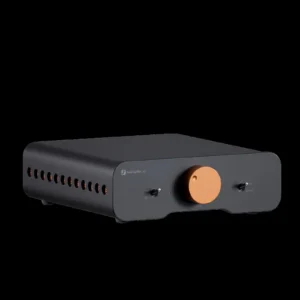
- The conversion and amplification stage: where the signal becomes something headphones can use.
- The headphones themselves: the final and most influential link of all.
This is where game audio usually falls apart — not in the game’s mix, which is often excellent, but in the last two links, where a noisy onboard output and a pair of bundled earbuds quietly undo it.
Settings that make an instant difference
- Pick the headphone mix preset if you use headphones; speaker presets compress the imaging you rely on.
- Turn off platform-level ‘enhancements’ and spatial add-ons while you test, then add back only what helps.
- Set dynamic range to full or ‘night mode’ off for single-player immersion; use the compressed option late at night, not by default.
- Check that the game and your system agree on the output device and channel configuration.
Ten minutes in the menus regularly beats a hundred spent on gear. Start there, with a familiar scene, and change one thing at a time.
Where to spend first
If you do spend, spend in order of influence. Headphones first, by a wide margin: they decide imaging, comfort over long sessions, and how much of the mix you can resolve at all. A clean, adequately powered source second, especially if your current output hisses or runs out of volume. Everything else is refinement. The biggest game audio upgrade for most people is not exotic at all — it is simply hearing the mix the developers shipped, undistorted and in full. And keep the receipt for anything you buy — a week of real play tells you more than any review, including this one.
Treat game audio as part of the game, not as an accessory to it. Sort your settings, be honest about your weakest link, and upgrade that first. When you are ready to look at dedicated gear built for the purpose, browsing a game audio collection is a sensible way to see what a proper chain includes — and what your current setup is missing.
Also Read
- ANR Meaning: Every Definition Explained Clearly (Slang, Tech, Aviation & More)
- Practical HVAC Maintenance Tips to Save Energy and Prevent Unexpected Repairs
- IKR Meaning in Text: The Complete Guide to “I Know, Right?”