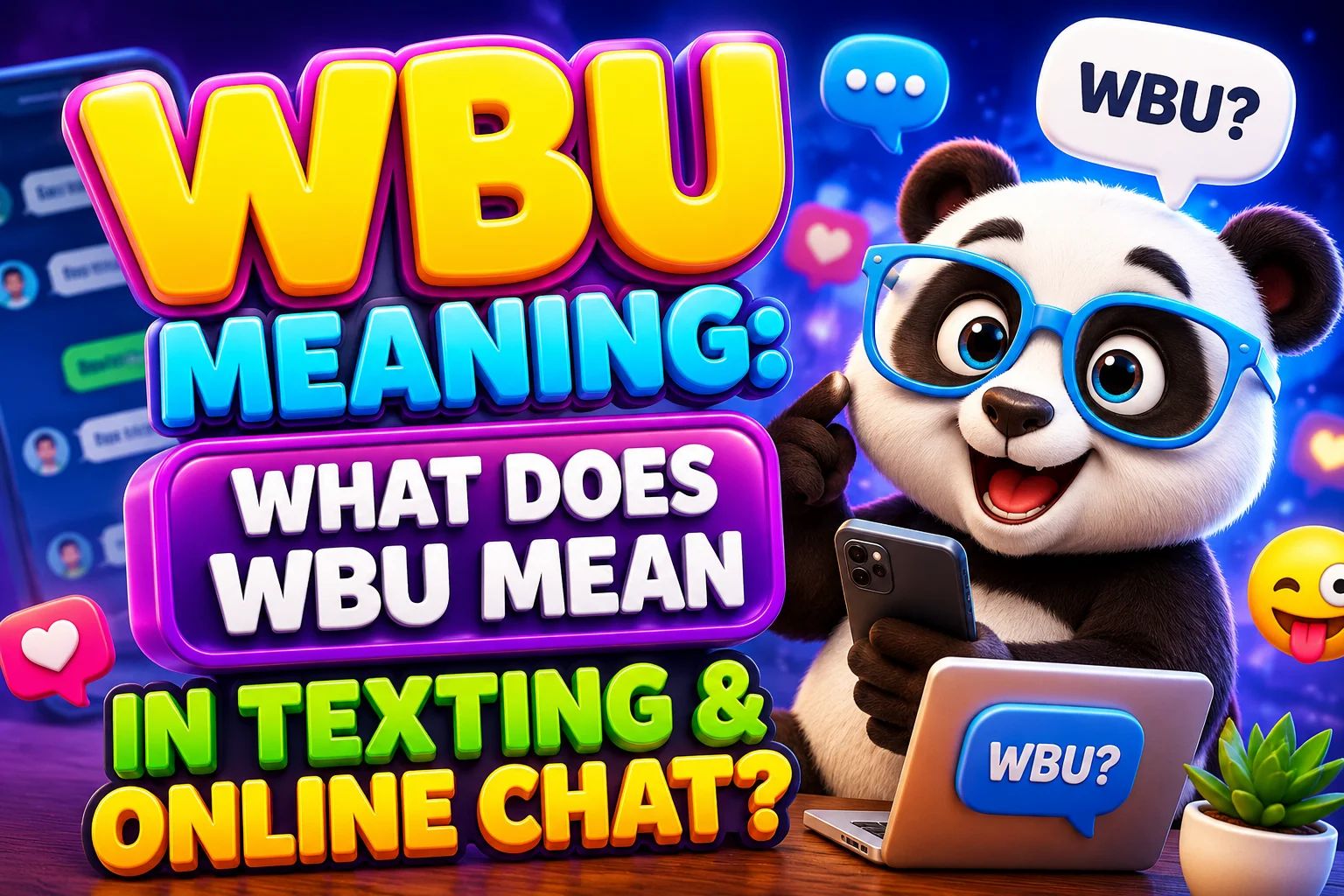
If someone sends you a message like “I’m doing great, WBU?”, you might wonder what those three letters mean. The answer is simple: WBU means “What About You?”
People use WBU in casual texts, online chats, direct messages, and other informal digital conversations. It usually appears after someone shares an answer, opinion, feeling, plan, or personal update. Instead of typing the full phrase “What about you?”, they shorten it to WBU.
For example:
“I’m staying home tonight. WBU?”
This means:
“I’m staying home tonight. What about you?”
The abbreviation works like a conversational handoff. One person shares something, then WBU passes the turn to the other person.
Although the meaning looks straightforward, the WBU meaning in text can change slightly depending on the conversation. It might ask about your mood, plans, opinion, preferences, location, or experience. Understanding the message before WBU usually tells you exactly what the sender wants to know.
Quick Answer
WBU means “What About You?”
It’s an informal texting abbreviation used to return a question to another person or invite them to share something about themselves.
Quick facts about WBU
| Detail | Answer |
| WBU meaning | What About You? |
| Type | Texting abbreviation / internet slang |
| Tone | Casual and conversational |
| Common use | Texts, DMs, chats, social media |
| Main purpose | Return a question or invite a response |
| Formal writing? | Usually no |
| Example | “I’m good, WBU?” |
| Similar expression | HBU — How About You? |
The most common texting definition is well established in abbreviation references. CyberDefinitions lists WBU as “What About You?” and classifies it as an abbreviation used in text communication.
In simple terms, WBU means “your turn to answer.”
Comparison Overview
The easiest way to understand WBU meaning in text is to compare it with similar expressions.
| Expression | Full Meaning | Main Purpose | Tone |
| WBU | What About You? | Returns a question | Casual |
| HBU | How About You? | Returns a question | Casual |
| WYD | What You Doing? | Asks about someone’s activity | Very casual |
| WBY | What About You? | Returns a question | Casual |
| And you? | And you? | Returns a question | Neutral |
| How about you? | How about you? | Asks for the other person’s answer | Neutral |
The biggest similarity is between WBU and HBU. In many everyday conversations, they perform almost exactly the same job. HBU generally means “How About You?” and is also widely used in informal messaging.
However, WBU and WYD aren’t interchangeable.
Consider these two messages:
“I’m watching a movie. WBU?”
The sender is probably asking what you’re doing or how you’re spending your time.
Now compare:
“What are you doing? WYD?”
Here, WYD directly asks about your current activity.
The surrounding conversation matters. That’s one reason you shouldn’t interpret texting abbreviations in isolation.
What Does WBU Mean in Text?
WBU means “What About You?” in text messages.
People generally use it after giving their own answer or sharing information. The abbreviation then invites the other person to provide a similar answer.
For example:
Person A: How was your weekend?
Person B: Pretty good. I visited my cousins. WBU?
Here, WBU means:
“What about your weekend?”
It doesn’t literally ask only the words “what about you?” without context. Instead, it refers back to the subject already being discussed.
That’s an important detail.
WBU can ask about different things
Depending on the conversation, WBU might mean:
- What about your day?
- What about your weekend?
- What about your plans?
- What about your opinion?
- What about your experience?
- What about your feelings?
- What about your preference?
- What about your situation?
For example:
“I prefer coffee. WBU?”
means:
“What do you prefer?”
Meanwhile:
“I’m feeling much better today. WBU?”
means:
“How are you feeling?”
The three letters stay the same. The context supplies the missing question.
What Does WBU Stand For?
WBU stands for “What About You?”
The abbreviation uses the main letters or sounds from the phrase:
- W = What
- B = About
- U = You
You may also see people explain it as a shortened form of “What ’bout you?”, reflecting the casual pronunciation of “about” and the texting use of U for “you.” Informal references document WBU as a shorthand for “What About You?” and “What ’Bout You?”
The exact spelling isn’t important in ordinary conversation.
You might see:
- WBU?
- wbu?
- Wbu?
- wbu
- WBU
They generally communicate the same idea.
How Is WBU Used in Texting?
The WBU meaning in texting becomes clearer when you look at actual conversation patterns.
WBU after answering a question
This is one of the most natural uses.
“I’m from Texas. WBU?”
The sender answers the question about their location and then asks about yours.
Another example:
“I’m 24. WBU?”
Here, WBU means:
“How old are you?”
The original topic tells you what the sender wants to know.
WBU after sharing plans
WBU can also return a question about future activities.
“I’m going to the gym after work. WBU?”
The likely meaning is:
“What are you doing after work?”
You don’t need to repeat the entire question because the context already makes it clear.
WBU when discussing opinions
The abbreviation also works well when people exchange preferences or viewpoints.
“I think the ending was great. WBU?”
This means:
“What do you think about the ending?”
It’s short without being difficult to understand.
WBU when discussing feelings
Someone may use WBU after describing their own emotional state.
“I’m a little nervous about tomorrow. WBU?”
Here, the sender is asking about your feelings.
The abbreviation doesn’t automatically mean “Are you nervous?” It simply points the question back toward you.
WBU to keep a conversation going
Sometimes the most important function of WBU is conversational.
Imagine this exchange:
Person A: What are you doing?
Person B: Just relaxing at home. WBU?
Without the second question, the conversation could easily stop.
WBU gives the other person an opening to respond.
WBU Meaning With Real Text Examples
Real examples make the abbreviation easier to understand because its meaning depends heavily on context.
| Text Message | What WBU Means |
| “I’m good, WBU?” | How are you? |
| “I’m staying home tonight, WBU?” | What are your plans? |
| “I love pizza, WBU?” | What food do you like? |
| “I think the movie was boring, WBU?” | What did you think? |
| “I’m from California, WBU?” | Where are you from? |
| “I’m working tomorrow, WBU?” | Are you working tomorrow? |
| “I had a rough day, WBU?” | How was your day? |
| “I prefer summer, WBU?” | Which season do you prefer? |
Notice the pattern.
WBU doesn’t carry the entire question by itself. Instead, it points back to the subject of the conversation.
That’s why reading the previous message is often enough to decode it.
WBU Meaning in Different Conversations
The abbreviation works in many informal settings. However, the tone and implied question can change with the situation.
WBU Between Friends
Friends commonly use WBU during quick conversations about everyday life.
“I’m grabbing coffee after class. WBU?”
A friend doesn’t need a formal sentence. The abbreviation feels natural because the relationship already supports casual language.
WBU in Group Chats
WBU can appear in group conversations when someone wants another person’s response.
“I think we should meet at 7. WBU?”
Depending on the group, this could mean:
“What do you think?”
or:
“What time works for you?”
The preceding discussion determines the intended meaning.
WBU in Social Media Messages
People can also use WBU in informal DMs and online conversations.
For example:
“That concert looked amazing. WBU, did you go?”
Here, WBU helps shift the conversation toward the other person’s experience.
The abbreviation is particularly useful when people already have an informal communication style.
WBU in Dating Conversations
WBU can appear in romantic or potentially flirtatious chats. However, WBU itself isn’t a romantic expression.
For example:
“I’m free this weekend. WBU?”
That message could come from a friend, coworker, date, or family member.
The surrounding language provides the emotional meaning.
If someone adds playful wording, emojis, compliments, or personal questions, the overall conversation might feel flirtier. But the three letters WBU don’t prove romantic interest.
That’s an important distinction.
Is WBU Rude, Dry, or Friendly?
WBU isn’t inherently rude.
In many situations, it’s simply a quick and friendly way to ask someone to share their answer.
For example:
“I’m having a pretty good day, WBU?”
That sounds conversational and interested.
However, context can affect how WBU feels.
When WBU sounds friendly
It usually feels warm when someone gives you enough context first.
“I just got home from the beach. Had a great time. WBU?”
The sender has shared something and clearly invites you into the conversation.
When WBU might feel dry
Consider receiving this after writing a detailed message:
“WBU?”
That could feel short or low-effort.
Still, don’t assume the sender is annoyed. They might simply type quickly or prefer brief messages.
When WBU can feel neutral
A message such as:
“I’m working tomorrow. WBU?”
is mostly practical. There’s no obvious emotional signal.
The abbreviation doesn’t determine the tone by itself.
Your relationship, the previous messages, punctuation, emojis, and the overall conversation all contribute to how the message feels.
Main Differences Between WBU Meaning and Similar Texting Abbreviations
Several texting abbreviations look similar because they perform related conversational jobs.
Understanding the differences helps you avoid misreading a message.
WBU vs. HBU
WBU = What About You?
HBU = How About You?
They often work as near-equivalents.
Compare:
“I’m doing well. WBU?”
and:
“I’m doing well. HBU?”
Both normally mean:
“I’m doing well. How are you?”
HBU may sound slightly more natural when asking about someone’s condition or feelings. WBU works especially well when returning a broader topic.
Still, there’s considerable overlap in everyday texting. HBU is also documented as an informal abbreviation for “How About You?” in online messaging.
WBU vs. WYD
WYD = What You Doing?
WBU = What About You?
These are different.
“I’m watching TV. WBU?”
The sender is likely asking what you’re doing.
But:
“WYD?”
directly asks what you’re doing.
WYD doesn’t necessarily return a previous question. WBU usually does.
WBU vs. WBY
WBY can also mean “What About You?”
However, WBU is the more recognizable form in the texting context covered by common abbreviation references. AllAcronyms lists WBU as “What About You?” and also records WBY among alternative abbreviations for the phrase.
WBU vs. “And you?”
These expressions have almost the same conversational function.
“I’m doing great. And you?”
“I’m doing great. WBU?”
The first sounds more natural in standard written English. The second feels more like texting shorthand.
What Does “NM WBU” Mean?
NM WBU means:
“Not Much, What About You?”
Here:
- NM = Not Much
- WBU = What About You?
A typical conversation might look like this:
Person A: What are you doing?
Person B: NM, WBU?
The reply means:
“Not much. What about you?”
This combination works because each abbreviation performs a different job. NM answers the question, while WBU returns it.
Another example:
Person A: How’s your evening going?
Person B: NM, WBU?
The meaning becomes:
“Not much is happening. What about your evening?”
The context fills in the details.
How to Reply to WBU
If someone sends “WBU?”, replying is usually easy.
The best response depends on what the person originally asked.
Simple replies
For a casual conversation, you can keep your answer short:
- “I’m good!”
- “Doing pretty well.”
- “Not much.”
- “Same here.”
- “I’m doing okay.”
- “Pretty busy today.”
More conversational replies
If you want to keep the conversation going, add a little detail.
“I’m doing well. I just finished work.”
Or:
“Pretty good! I’m heading out with some friends later.”
A useful formula is:
Answer + small detail + optional question
For example:
“I’m doing great. I finally finished my project. How about you?”
That response feels more natural than simply saying:
“Good.”
If WBU refers to an opinion
Suppose someone writes:
“I think the new restaurant is overrated. WBU?”
You could answer:
“I actually liked it. The food was pretty good.”
The right response follows the topic rather than treating WBU as a fixed question such as “How are you?”
Also Read This: ICR Meaning in Text: What Does ICR Stand For in Chats & Online Conversations?
When Should You Use WBU?
WBU works best when the conversation is already informal.
Good situations for WBU
- Texting close friends
- Casual conversations
- Informal group chats
- Social media DMs
- Messaging people you know well
- Casual online communities
Example
“I’m free Saturday afternoon. WBU?”
The abbreviation fits naturally because the conversation is informal.
When Shouldn’t You Use WBU?
Although WBU is useful, it isn’t suitable for every type of communication.
Avoid it in:
- Formal business emails
- Academic assignments
- Resumes
- Cover letters
- Formal reports
- Official applications
- Professional correspondence
- Legal or administrative documents
Instead, write the complete phrase.
Casual
“I’m available tomorrow. WBU?”
More professional
“I’m available tomorrow. What about you?”
Even better, in a formal setting, you may need a more specific sentence:
“I’m available tomorrow afternoon. Would that time work for you as well?”
The issue isn’t that WBU is grammatically wrong. It’s that texting shorthand doesn’t match the expectations of formal writing.
Does Capitalization Change the WBU Meaning?
No.
WBU, wbu, and Wbu generally mean the same thing.
For example:
“I’m good, WBU?”
and:
“I’m good, wbu?”
have the same basic meaning.
Lowercase often looks more relaxed because people commonly type informal messages without worrying about capitalization.
The uppercase version may appear because someone typed it that way, used autocapitalization, or simply prefers uppercase abbreviations.
Capitalization doesn’t create a new definition.
Where Did WBU Come From?
WBU belongs to the broader world of texting and internet shorthand, where people shorten familiar phrases for faster, more casual communication.
The exact person or moment that first created WBU isn’t firmly established. Claims about one specific inventor or one exact origin date should therefore be treated cautiously.
What can be said with confidence is that WBU has been documented in online slang and texting references for many years. For example, Urban Dictionary has user-submitted entries for WBU dating back to 2007, describing it as shorthand for “what about you?”
The abbreviation also fits a larger pattern of digital shorthand, including expressions such as:
- LOL
- BRB
- BTW
- IDK
- IMO
- TTYL
- LMK
These forms make informal communication faster and more compact.
The important point is that WBU isn’t a formal English abbreviation. It’s a conversational shortcut.
Can WBU Have Other Meanings?
Yes. Abbreviations can represent different things in different fields.
In ordinary texting, “What About You?” is the meaning readers should usually consider first when the surrounding message is conversational. However, WBU can represent unrelated names or organizations in other contexts.
For example, abbreviation databases list Wayland Baptist University and World Buddhist University among other meanings of WBU.
Context is therefore essential.
Compare:
“I’m good, WBU?”
Here, WBU clearly refers to “What About You?”
But:
“WBU announced a new academic program.”
That sentence might refer to an organization or institution rather than texting slang.
Don’t interpret an abbreviation without looking at the surrounding words.
Common Mistakes People Make With WBU
Mistake: Assuming WBU always means “How are you?”
Not necessarily.
If someone writes:
“I prefer tea. WBU?”
They’re asking about your preference, not your health.
Mistake: Confusing WBU with WYD
WBU means “What About You?”
WYD means “What You Doing?”
They’re related to casual conversation, but they aren’t the same abbreviation.
Mistake: Assuming WBU is automatically flirty
It isn’t.
A person can use WBU with a friend, relative, coworker, classmate, or romantic partner.
The broader conversation determines the tone.
Mistake: Thinking lowercase WBU means something different
It doesn’t.
WBU and wbu normally have the same meaning.
Mistake: Using WBU in formal writing
Texting abbreviations belong in informal communication.
A school essay, business letter, or professional email usually calls for standard wording.
Mistake: Sending WBU without enough context
Although WBU is short and convenient, it can become unclear if the previous conversation contains several possible topics.
For example:
“I like the first one. WBU?”
If the conversation involves several choices, the recipient may not know what “what about you?” refers to.
A clearer message might be:
“I like the first restaurant. What about you?”
Sometimes an extra few words prevent confusion.
Why WBU Works So Well in Casual Conversations
WBU is useful because it performs two conversational jobs at once.
First, it acknowledges the current topic.
Second, it invites the other person to contribute.
Imagine someone asks:
“What did you do this weekend?”
You answer:
“I went hiking with my brother. WBU?”
You’ve answered the question without ending the exchange.
That final abbreviation acts like a small bridge between two speakers.
A simple conversation pattern
Question
↓
Your answer
↓
WBU?
↓
Their answer
↓
Conversation continues
This is why WBU often feels more engaging than answering a question with a single sentence and stopping there.
It gives the other person an obvious opening.
Case Study: How Context Changes WBU Meaning
Consider three conversations.
Case 1: Daily routine
Alex: What are you doing tonight?
Sam: I’m staying home and watching a movie. WBU?
Here, WBU means:
“What are you doing tonight?”
Case 2: Personal preference
Alex: I always choose coffee over tea. WBU?
Sam: Definitely tea.
Here, WBU means:
“What do you prefer?”
Case 3: Feelings
Alex: I’m nervous about the interview tomorrow. WBU?
Sam: Honestly, I’m nervous too.
Here, WBU means:
“How are you feeling about the interview?”
The abbreviation hasn’t changed.
The conversational subject changed.
That’s the central idea to remember when interpreting WBU.
WBU Meaning in a Nutshell
Here’s the complete picture at a glance:
| Question | Answer |
| What does WBU mean? | What About You? |
| What does WBU stand for? | What About You? |
| Is WBU texting slang? | Yes, it’s informal texting shorthand. |
| What does WBU mean in chat? | It returns a question to the other person. |
| What does NM WBU mean? | Not Much, What About You? |
| Is WBU the same as HBU? | Often, yes. |
| Is WBU the same as WYD? | No. |
| Is WBU formal? | No, it’s mainly informal. |
| Can WBU be friendly? | Yes. |
| Can WBU be flirty? | It can appear in flirty conversations, but the abbreviation itself isn’t inherently flirty. |
| Does WBU change meaning in lowercase? | No. |
FAQs:
What does WBU mean in texting?
WBU means “What About You?” People use it in casual texts and online chats to return a question to someone. For example, “I’m doing great, WBU?” means “I’m doing great. What about you?”
What does WBU mean from a girl or guy?
The WBU meaning is the same regardless of who sends it. It simply means “What About You?” The surrounding conversation determines whether the message sounds friendly, casual, curious, or potentially flirty.
What does NM WBU mean?
NM WBU means “Not Much, What About You?” NM means “Not Much” while WBU means “What About You?” For example, “What are you doing?” followed by “NM, WBU?” means the person isn’t doing much and wants to know what you’re doing.
Is WBU the same as HBU?
They’re very similar. WBU means “What About You?” while HBU means “How About You?” Both commonly return a question to the other person during casual conversations.
Is WBU appropriate for formal writing?
Usually, no. WBU is informal texting shorthand, so it’s best for casual messages, chats, and DMs. In professional emails, school assignments, or formal documents, write “What about you?” instead.
Conclusion:
The WBU meaning is simple: “What About You?” It’s a convenient abbreviation that helps people keep casual conversations moving without typing the entire phrase.
You’ll usually see WBU after someone shares an answer, opinion, feeling, preference, or plan. The exact question depends on the context. That’s why “I like summer, WBU?” asks about your preference while “I’m feeling good today, WBU?” asks about your feelings.
Remember the main distinctions:
- WBU = What About You?
- HBU = How About You?
- WYD = What You Doing?
- NM WBU = Not Much, What About You?
WBU works well in texts, DMs, group chats, and other informal conversations. However, formal writing calls for the complete phrase. When you understand the context, this three-letter abbreviation becomes easy to recognize and use naturally.