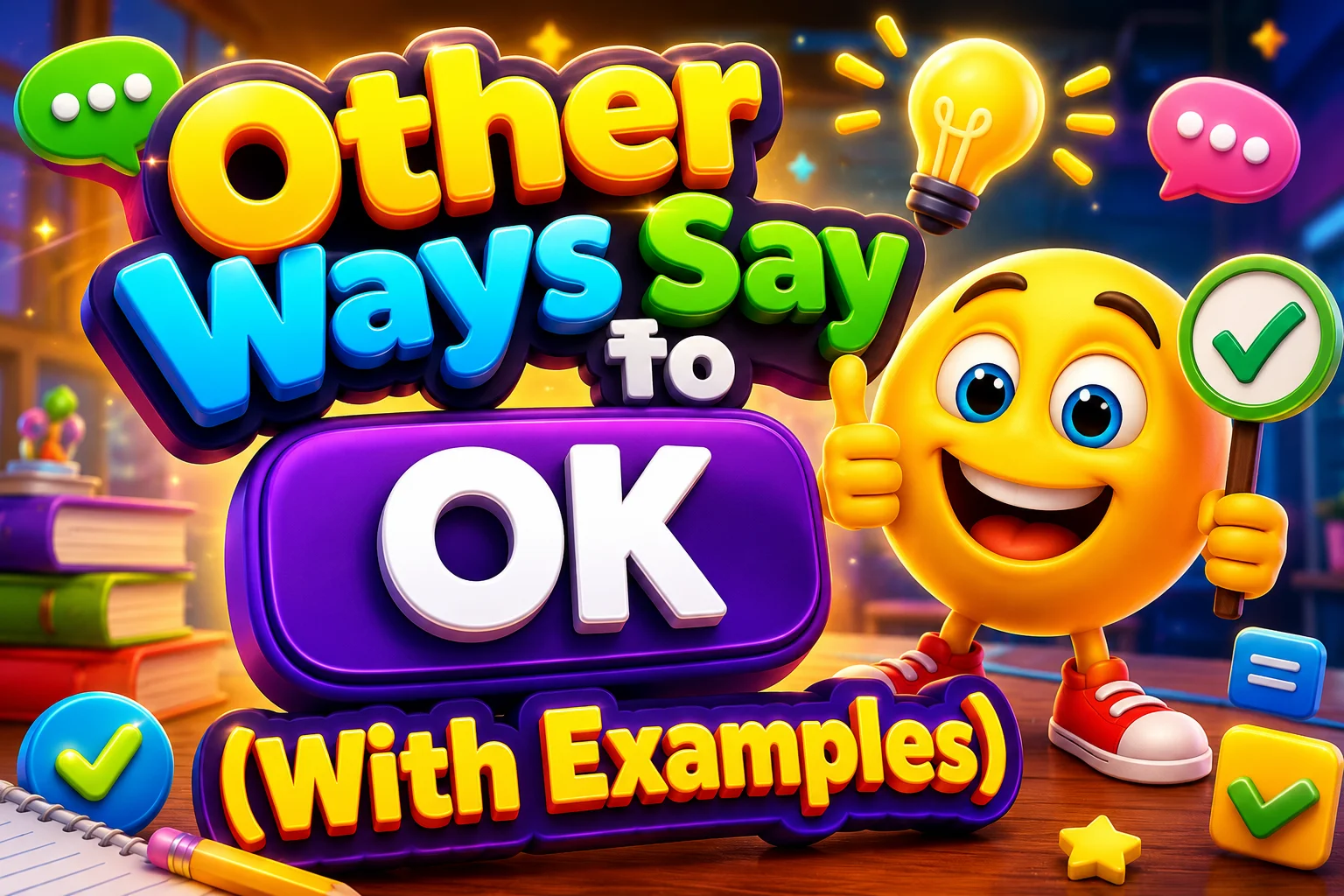
Other Ways to Say “OK” (With Examples) can help you express agreement, acceptance, or confirmation more naturally. Although OK is one of the most common words in English, using different expressions makes your conversations sound warmer, clearer, and more engaging.
When I first started paying closer attention to everyday English conversations, I realized how incredibly versatile OK is. It can work as an adjective, adverb, verb, noun, or interjection, making it fit naturally into almost any sentence. Whether you want to say all right, show something is satisfactory, acknowledge a message, confirm plans with friends, or show that you agree and find something acceptable, this simple word does it all. It can even be spelled in different ways, such as okay, without changing its meaning or function. In this guide, you’ll discover thoughtful alternatives that help you communicate with more variety while keeping your message clear, natural, and friendly.
What Does “OK” Mean?
The word “OK” is a simple and versatile expression used to show agreement, understanding, acceptance, approval, or confirmation. Depending on the situation, it can mean “I understand,” “I agree,” “That’s acceptable,” or “Everything is fine.” It is one of the most frequently used words in everyday English because it fits both casual and professional conversations.
Benefits of Using “OK”
Using “OK” has many advantages because it is short, easy to understand, and recognized around the world. It allows you to respond quickly in conversations, emails, text messages, and workplace communication without causing confusion.
Is It Professional/Polite to Say “OK”?
Yes, “OK” is generally considered both professional and polite, especially in everyday workplace communication. It is commonly used to acknowledge instructions, confirm information, or indicate agreement. In many business settings, saying “OK” is perfectly acceptable when the conversation is informal or between colleagues who communicate regularly.
When to Use These Alternatives to “OK”
Choosing the right alternative to “OK” depends on who you’re speaking with, the situation, and the tone you want to convey. While some expressions are perfect for casual conversations, others are better suited for professional emails, workplace meetings, customer interactions, or formal discussions. Using the appropriate phrase helps your message sound more natural, respectful, and engaging.
1. Alright
Meaning:
Alright means everything is acceptable, understood, or agreed upon. It is a friendly alternative to “OK” that fits both casual conversations and many workplace situations.
Examples:
- Alright, I’ll send the report before tomorrow morning as you requested.
- Alright, let’s meet outside the office after everyone finishes their work.
- Alright, I completely understand your point and will follow your advice.
- Alright, thanks for letting me know about the schedule change today.
- Alright, everything looks good and we’re ready to begin the meeting.
Tone:
Friendly, casual, reassuring, and positive.
Explanation:
Alright sounds warmer than “OK” and shows agreement without appearing too formal. It helps conversations feel relaxed while still confirming understanding or acceptance clearly.
Best Use:
Use Alright when talking with friends, family, coworkers, classmates, or clients in informal or semi-professional conversations.
2. Sounds Good
Meaning:
Sounds Good expresses approval or agreement with an idea, suggestion, or plan. It shows that you are happy to move forward.
Examples:
- Sounds good, I’ll arrive fifteen minutes early to help with everything.
- Sounds good, let’s finish this project before the end of the week.
- Sounds good, thank you for sharing your thoughtful suggestion with our team.
- Sounds good, I’ll call you once I reach the office safely today.
- Sounds good, we can discuss the remaining details during tomorrow’s meeting together.
Tone:
Positive, encouraging, friendly, and cooperative.
Explanation:
This phrase communicates enthusiasm while confirming agreement. It feels more engaging than “OK” and encourages positive communication in personal and professional settings.
Best Use:
Use Sounds Good when accepting invitations, confirming plans, responding to suggestions, or agreeing with coworkers and friends.
3. Certainly
Meaning:
Certainly means you are willing to do something without hesitation. It expresses confident agreement and polite acceptance.
Examples:
- Certainly, I’ll prepare the documents before the client arrives this afternoon.
- Certainly, I can assist you with that task whenever you’re ready.
- Certainly, thank you for giving me the opportunity to help today.
- Certainly, I’ll review everything carefully before sending my final response tomorrow.
- Certainly, please let me know if you need any additional assistance.
Tone:
Professional, respectful, confident, and courteous.
Explanation:
Certainly sounds more polished than “OK” and demonstrates professionalism. It reassures the listener that their request has been accepted with confidence and respect.
Best Use:
Use Certainly in business emails, customer service, formal meetings, professional conversations, and client communications.
4. Absolutely
Meaning:
Absolutely expresses complete agreement or strong confirmation. It shows confidence, enthusiasm, and wholehearted support.
Examples:
- Absolutely, I’d be happy to help you complete the project successfully today.
- Absolutely, your idea deserves careful consideration before making any final decision.
- Absolutely, we should celebrate everyone’s hard work after finishing this important milestone.
- Absolutely, I’ll make sure every detail receives my full attention today.
- Absolutely, thank you for trusting me with this important responsibility and opportunity.
Tone:
Enthusiastic, confident, supportive, and encouraging.
Explanation:
Using Absolutely adds energy and positivity to your response. It emphasizes complete agreement and makes your message feel more sincere and encouraging than simply saying “OK.”
Best Use:
Use Absolutely when showing strong agreement, encouraging others, supporting ideas, or responding enthusiastically in personal and professional conversations.
5. Understood
Meaning:
Understood means you have received, comprehended, and accepted the information or instructions that were given.
Examples:
- Understood, I’ll complete every assigned task before tomorrow afternoon without delay.
- Understood, I’ll follow the updated instructions exactly as you explained today.
- Understood, thank you for clarifying the project requirements so clearly and patiently.
- Understood, I’ll inform the rest of the team immediately after this meeting.
- Understood, I’ll double-check everything before submitting the final completed report.
Tone:
Professional, respectful, clear, and dependable.
Explanation:
Understood clearly confirms that you have listened carefully and know what is expected. It sounds more responsible and precise than simply replying with “OK.”
Best Use:
Use Understood in workplace conversations, business emails, project discussions, training sessions, and whenever acknowledging instructions clearly is important.
6. Fine
Meaning:
Fine means something is acceptable, satisfactory, or agreed upon. It is a simple alternative to “OK” that confirms acceptance without adding extra enthusiasm.
Examples:
- Fine, I’ll finish the remaining tasks before leaving the office this evening.
- Fine, we can change the meeting time if everyone agrees tomorrow.
- Fine, thank you for explaining everything so clearly during today’s discussion.
- Fine, I’ll review the document carefully before sharing my final feedback.
- Fine, let’s continue working together until the project is successfully completed.
Tone:
Neutral, calm, accepting, and straightforward.
Explanation:
Fine communicates agreement or acceptance in a clear and uncomplicated way. Depending on your voice and context, it can sound polite, neutral, or slightly reluctant.
Best Use:
Use Fine when accepting a suggestion, confirming a decision, or responding calmly in casual and professional conversations.
7. Sure
Meaning:
Sure expresses willingness, agreement, or readiness to do something. It is one of the friendliest and most commonly used alternatives to “OK.”
Examples:
- Sure, I’ll help you organize the presentation before tomorrow’s important meeting.
- Sure, we can discuss your ideas during our lunch break together today.
- Sure, I’ll send the updated files as soon as I finish editing.
- Sure, thank you for asking me to be part of this project.
- Sure, let’s meet outside the library after everyone finishes their classes today.
Tone:
Friendly, casual, helpful, and approachable.
Explanation:
Sure sounds warm and cooperative while showing a willingness to help or agree. It creates a relaxed atmosphere and feels more conversational than simply saying “OK.”
Best Use:
Use Sure with friends, family, coworkers, customers, or classmates when accepting requests or agreeing to plans.
8. Of Course
Meaning:
Of Course means you are happy to agree or help without hesitation. It suggests that the request is reasonable and gladly accepted.
Examples:
- Of course, I’ll assist you with the report before the submission deadline arrives.
- Of course, you can borrow my notes for tomorrow’s important class discussion.
- Of course, I’ll call you immediately after reaching home safely this evening.
- Of course, thank you for trusting me with this important responsibility today.
- Of course, let’s work together until every task has been completed successfully.
Tone:
Warm, polite, supportive, and encouraging.
Explanation:
Of Course expresses kindness and willingness while reassuring the listener. It sounds more caring than “OK” and helps strengthen both personal and professional relationships.
Best Use:
Use Of Course when accepting requests, offering assistance, reassuring others, or responding politely in everyday conversations.
9. No Problem
Meaning:
No Problem means you are happy to help or that something is not difficult or inconvenient. It reassures the other person.
Examples:
- No problem, I’ll take care of everything before the office closes today.
- No problem, thanks for letting me know about the schedule adjustment early.
- No problem, I’ll gladly answer any questions you have after the meeting.
- No problem, we can finish the remaining work together this afternoon instead.
- No problem, I’ll remind everyone about tomorrow’s important team presentation later.
Tone:
Friendly, reassuring, relaxed, and helpful.
Explanation:
This phrase makes others feel comfortable by showing that their request is not a burden. It creates a positive, cooperative atmosphere and sounds more welcoming than “OK.”
Best Use:
Use No Problem when responding to requests, offering help, or reassuring friends, coworkers, customers, or family members.
10. I Agree
Meaning:
I Agree clearly states that you share the same opinion, decision, or viewpoint as someone else. It removes any uncertainty about your position.
Examples:
- I agree, your suggestion will improve the project’s overall quality and efficiency greatly.
- I agree, we should complete the planning before beginning the implementation phase tomorrow.
- I agree, teamwork always produces stronger results than working completely alone together.
- I agree, your feedback helped us identify several important areas needing improvement.
- I agree, let’s finalize the proposal before presenting it to the management team.
Tone:
Confident, respectful, supportive, and collaborative.
Explanation:
I Agree directly expresses shared understanding and support for another person’s opinion. It is more specific than “OK” and encourages productive, respectful communication in discussions.
Best Use:
Use I Agree during meetings, group discussions, brainstorming sessions, classroom conversations, or whenever expressing support for someone’s opinion is important.
11. That’s Fine
Meaning:
That’s Fine means you accept a situation, suggestion, or decision without objection. It politely shows that you are comfortable with the outcome.
Examples:
- That’s fine, we can postpone the meeting until everyone becomes available tomorrow.
- That’s fine, I’ll update the presentation before sending it to the entire team.
- That’s fine, thank you for informing me about the unexpected schedule change today.
- That’s fine, let’s discuss the remaining details during tomorrow’s planning session together.
- That’s fine, I’ll wait until you finish reviewing the final proposal carefully.
Tone:
Polite, calm, understanding, and accommodating.
Explanation:
That’s Fine expresses acceptance in a gentle and respectful way. It helps avoid conflict while showing flexibility, making conversations feel more cooperative and positive.
Best Use:
Use That’s Fine when accepting changes, responding to requests, agreeing with plans, or reassuring someone that a situation is acceptable.
12. Will Do
Meaning:
Will Do means you have accepted a request and promise to complete it. It confirms both understanding and commitment.
Examples:
- Will do, I’ll send the completed report before tomorrow afternoon without any delay.
- Will do, I’ll remind everyone about the meeting later this evening promptly.
- Will do, thank you for sharing the updated project requirements with me.
- Will do, I’ll double-check every detail before submitting the final version tomorrow.
- Will do, I’ll contact the client immediately after receiving your approval today.
Tone:
Positive, dependable, confident, and professional.
Explanation:
Will Do clearly communicates your intention to complete a task. It sounds more proactive than “OK” and reassures others that they can rely on you.
Best Use:
Use Will Do when accepting assignments, responding to instructions, confirming responsibilities, or acknowledging workplace tasks.
13. Got It
Meaning:
Got It means you fully understand the information or instructions that someone has given you.
Examples:
- Got it, I’ll follow every instruction exactly as you explained during today’s meeting.
- Got it, I’ll prepare the presentation before everyone arrives tomorrow morning early.
- Got it, thank you for clarifying the new company policy so clearly today.
- Got it, I’ll notify the rest of the team after completing this task.
- Got it, I’ll review the document once more before sending the final copy.
Tone:
Friendly, confident, clear, and responsive.
Explanation:
Got It immediately confirms understanding without sounding overly formal. It keeps conversations efficient while reassuring the speaker that their message has been received correctly.
Best Use:
Use Got It during team discussions, workplace communication, classroom settings, customer support, or casual conversations requiring quick acknowledgment.
14. Consider It Done
Meaning:
Consider It Done means you are confident that the task will be completed successfully. It expresses commitment and reliability.
Examples:
- Consider it done, I’ll finish the entire project before tomorrow’s important deadline arrives.
- Consider it done, I’ll arrange everything exactly as you requested for the event.
- Consider it done, thank you for trusting me with this important responsibility today.
- Consider it done, I’ll update you immediately after completing every assigned task successfully.
- Consider it done, I’ll ensure every detail receives careful attention throughout the process.
Tone:
Confident, reassuring, professional, and dependable.
Explanation:
This expression demonstrates confidence and responsibility. It reassures others that you will complete the task without needing further reminders, making it stronger than simply saying “OK.”
Best Use:
Use Consider It Done when accepting important assignments, reassuring clients, managing projects, or promising reliable service.
15. Fair Enough
Meaning:
Fair Enough means you understand and accept another person’s opinion, explanation, or decision, even if you initially thought differently.
Examples:
- Fair enough, I understand your reasoning and respect the final decision completely.
- Fair enough, let’s continue with your plan since everyone agrees on it.
- Fair enough, thank you for explaining the situation so honestly and clearly today.
- Fair enough, we’ll adjust our schedule according to the updated project timeline instead.
- Fair enough, I appreciate your perspective and completely understand your concerns now.
Tone:
Respectful, open-minded, understanding, and conversational.
Explanation:
Fair Enough acknowledges another person’s viewpoint with maturity and respect. It encourages healthy discussions by showing that you recognize and accept reasonable opinions or decisions.
Best Use:
Use Fair Enough during friendly debates, team discussions, negotiations, problem-solving conversations, or when respectfully accepting someone else’s viewpoint.
16. I Understand
Meaning:
I Understand means you clearly comprehend what someone is saying, feeling, or requesting. It shows both understanding and empathy.
Examples:
- I understand, I’ll adjust the schedule to accommodate everyone’s availability this week.
- I understand, thank you for explaining the situation with complete honesty and clarity.
- I understand, let’s work together to find the best possible solution today.
- I understand, I’ll follow your instructions carefully throughout the entire project process.
- I understand, your concerns are completely reasonable and deserve thoughtful consideration today.
Tone:
Empathetic, respectful, supportive, and professional.
Explanation:
I Understand reassures others that you have carefully listened to their message. It builds trust and strengthens communication by showing empathy instead of simply acknowledging with “OK.”
Best Use:
Use I Understand when responding to concerns, acknowledging instructions, comforting someone, or confirming that you clearly understand a message.
Also Read This : 25 Other Ways to Say “Grasp” (With Examples)
17. Works for Me
Meaning:
Works for Me means you are satisfied with a suggestion, plan, or decision. It indicates that the proposed option is acceptable.
Examples:
- Works for me, let’s schedule the meeting after lunch tomorrow afternoon instead.
- Works for me, I’ll complete my assigned tasks before the agreed deadline arrives.
- Works for me, thank you for suggesting such a practical and efficient solution.
- Works for me, we can begin the presentation once everyone joins the meeting.
- Works for me, I’ll review everything carefully before giving my final approval tomorrow.
Tone:
Friendly, cooperative, relaxed, and positive.
Explanation:
This phrase communicates agreement in a natural and conversational way. It encourages teamwork and shows flexibility without sounding overly formal or indifferent.
Best Use:
Use Works for Me when agreeing to plans, confirming schedules, accepting suggestions, or collaborating with friends and coworkers.
18. That’s Acceptable
Meaning:
That’s Acceptable means a proposal, result, or situation meets the required standards or expectations.
Examples:
- That’s acceptable, the revised proposal now meets all project requirements completely.
- That’s acceptable, we can proceed with the updated timeline without any concerns.
- That’s acceptable, thank you for making the requested improvements so quickly today.
- That’s acceptable, let’s move forward with the agreed solution immediately after approval.
- That’s acceptable, your explanation answered every important question we discussed earlier today.
Tone:
Professional, formal, objective, and respectful.
Explanation:
That’s Acceptable provides a clear evaluation while maintaining professionalism. It is especially useful when reviewing work, approving decisions, or confirming that expectations have been met.
Best Use:
Use That’s Acceptable in business meetings, performance reviews, project approvals, formal discussions, or quality evaluations.
19. Very Well
Meaning:
Very Well means you agree to proceed with a request or decision. It often reflects polite acceptance in formal situations.
Examples:
- Very well, I’ll prepare the necessary documents before tomorrow’s client meeting begins.
- Very well, we shall proceed according to the revised project schedule immediately.
- Very well, thank you for presenting your recommendations so clearly and professionally today.
- Very well, I’ll notify the entire team once the approval has been received.
- Very well, let’s finalize every detail before announcing the official decision publicly.
Tone:
Formal, courteous, composed, and professional.
Explanation:
Very Well conveys respectful agreement while maintaining a polished tone. It is more formal than “OK” and works well in professional or official communication.
Best Use:
Use Very Well during formal meetings, business correspondence, leadership discussions, or official workplace communication.
20. Agreed
Meaning:
Agreed means both parties share the same opinion or have reached the same decision. It clearly confirms mutual understanding.
Examples:
- Agreed, we’ll complete the remaining work before the project’s final deadline next week.
- Agreed, your proposal offers the most practical solution for everyone involved today.
- Agreed, thank you for discussing every concern openly during today’s productive meeting together.
- Agreed, let’s move forward with the approved strategy starting tomorrow morning promptly.
- Agreed, I’ll update the shared documents immediately after receiving the final confirmation.
Tone:
Professional, confident, collaborative, and decisive.
Explanation:
Agreed emphasizes shared commitment and mutual understanding. It helps conclude discussions positively while ensuring everyone is aligned on the next steps.
Best Use:
Use Agreed in team meetings, negotiations, project planning, contracts, collaborative discussions, or whenever confirming a mutual decision.
21. Roger That
Meaning:
Roger That means your message has been received, understood, and acknowledged. Originally used in military and aviation communication, it is now also common in casual conversations.
Examples:
- Roger that, I’ll complete every assigned task before tomorrow morning without any delays.
- Roger that, I’ll update the team immediately after receiving the client’s final approval.
- Roger that, thank you for explaining the revised instructions so clearly today.
- Roger that, we’ll begin the presentation once every participant joins the meeting successfully.
- Roger that, I’ll confirm the completed work before submitting the final report tomorrow.
Tone:
Confident, clear, responsive, and slightly informal.
Explanation:
Roger That confirms that you have received and understood a message. It sounds confident and efficient, making it a memorable alternative to simply saying “OK.”
Best Use:
Use Roger That in team communication, project coordination, casual workplace conversations, or lighthearted discussions with friends.
22. You Bet
Meaning:
You Bet means you are happy to agree, help, or confirm something. It expresses enthusiasm and friendliness.
Examples:
- You bet, I’ll gladly help you prepare everything before tomorrow’s important presentation begins.
- You bet, thank you for inviting me to participate in this exciting opportunity today.
- You bet, I’ll send the requested information before the end of the business day.
- You bet, we can work together until every task has been completed successfully.
- You bet, I’ll be there early to assist everyone with the event setup.
Tone:
Friendly, cheerful, enthusiastic, and encouraging.
Explanation:
You Bet adds warmth and energy to your response. It makes others feel appreciated while showing genuine willingness to help or agree.
Best Use:
Use You Bet when helping friends, responding to gratitude, accepting requests, or encouraging positive conversations.
23. Deal
Meaning:
Deal means you accept an agreement, proposal, or arrangement. It confirms that both sides are happy with the decision.
Examples:
- Deal, let’s complete the remaining work together before tomorrow’s scheduled client meeting begins.
- Deal, I’ll handle the presentation while you prepare the supporting documents today.
- Deal, thank you for suggesting such a practical solution for our entire team.
- Deal, we’ll finalize every detail before announcing the completed project officially next week.
- Deal, I’ll contact you immediately after confirming the meeting with our client.
Tone:
Friendly, confident, cooperative, and casual.
Explanation:
Deal signals mutual agreement in a concise and positive way. It encourages collaboration and works especially well when confirming shared decisions or plans.
Best Use:
Use Deal during negotiations, planning discussions, friendly agreements, teamwork, or casual business conversations.
24. Perfect
Meaning:
Perfect means something is exactly right or completely satisfactory. It expresses strong approval and enthusiasm.
Examples:
- Perfect, I’ll prepare the final presentation before tomorrow’s important team meeting begins.
- Perfect, thank you for providing every detail needed to complete this project successfully.
- Perfect, we can move forward with the approved plan starting tomorrow morning confidently.
- Perfect, I’ll review the documents carefully before sending the final version today.
- Perfect, your suggestion solves the problem in the most effective way possible.
Tone:
Positive, enthusiastic, encouraging, and appreciative.
Explanation:
Perfect communicates complete satisfaction and excitement. It creates a positive atmosphere and makes your response sound more energetic than a simple “OK.”
Best Use:
Use Perfect when approving ideas, confirming plans, praising results, or expressing excitement about successful outcomes.
25. I’m On It
Meaning:
I’m On It means you have already started or are about to begin a task immediately. It shows commitment and urgency.
Examples:
- I’m on it, I’ll finish the requested updates before tomorrow afternoon without any delay.
- I’m on it, thank you for trusting me with this important assignment today.
- I’m on it, I’ll contact the client immediately after reviewing every necessary detail carefully.
- I’m on it, we’ll resolve the issue quickly and keep everyone informed throughout.
- I’m on it, I’ll send you a progress update before the end of today.
Tone:
Proactive, confident, reliable, and professional.
Explanation:
I’m On It reassures others that action is already underway. It demonstrates responsibility and initiative, making it a stronger and more dependable response than simply saying “OK.”
Best Use:
Use I’m On It when accepting urgent tasks, responding to requests, managing projects, or assuring others that work has already begun.
FAQs
1. What is the best alternative to “OK” in professional emails?
Understood, Certainly, Will Do, Agreed, and Very Well are excellent professional alternatives because they sound polite, respectful, and clear.
2. Is it rude to reply with just “OK”?
No. “OK” is generally polite, but by itself it may sometimes sound brief or impersonal. Adding a warmer alternative can make your response friendlier.
3. Which alternative sounds the most enthusiastic?
Absolutely, Perfect, Sounds Good, and You Bet express enthusiasm and positivity while showing strong agreement or approval.
4. What is the most formal replacement for “OK”?
Certainly, Understood, Very Well, and That’s Acceptable are among the most formal options for workplace and business communication.
5. Can I use “Sounds Good” in the workplace?
Yes. Sounds Good is widely accepted in modern workplaces, especially in conversations with colleagues and informal business emails.
Conclusion
Using alternatives to “OK” helps your conversations sound more natural, thoughtful, and engaging. Whether you want to express agreement, understanding, acceptance, or enthusiasm, choosing the right phrase can make your message more meaningful and appropriate for the situation. From “Alright” and “Sounds Good” to “I’m On It” and “Absolutely,” each expression carries its own tone and purpose.