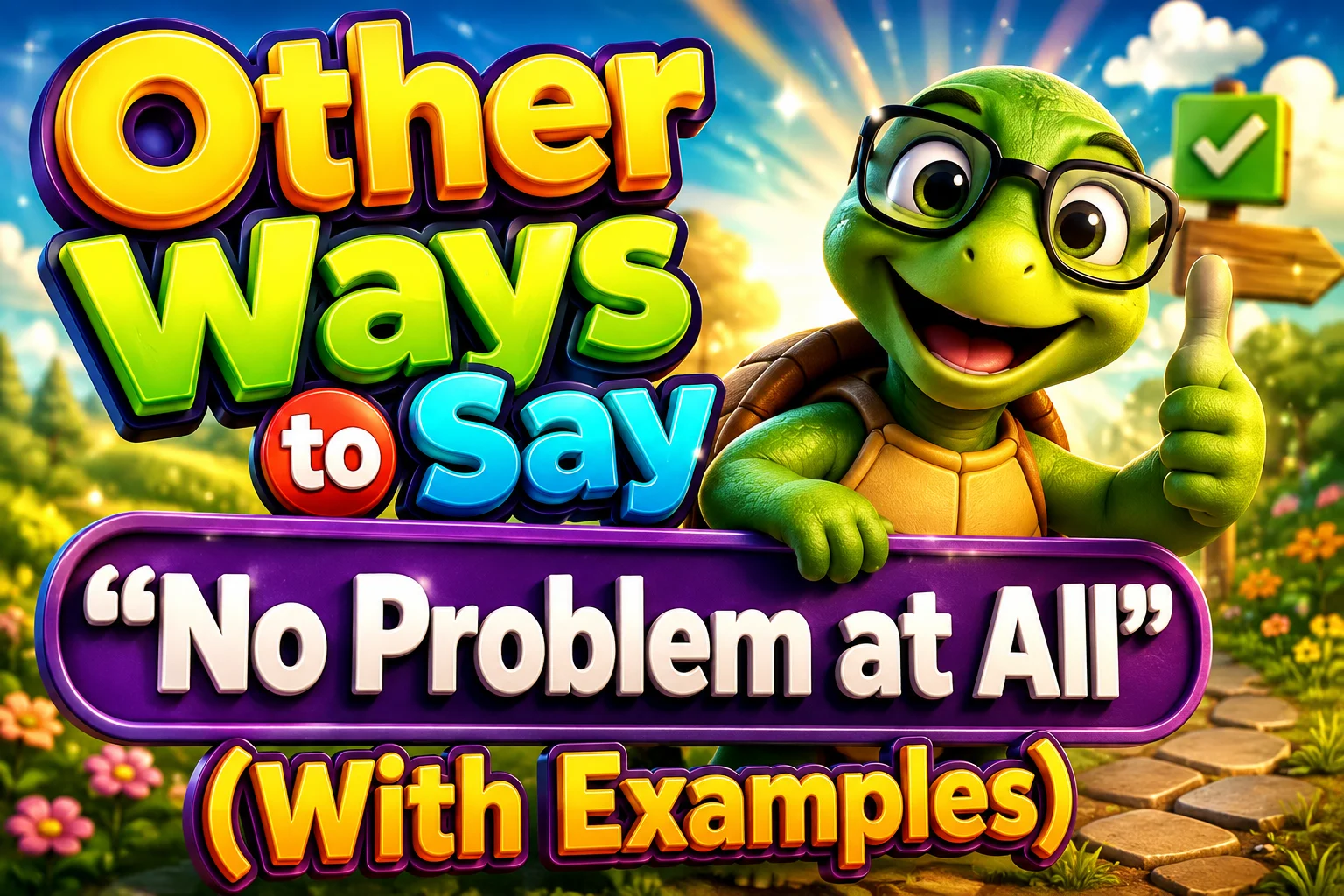
Other ways to say “No Problem at All” can make everyday communication sound warmer, clearer, and more natural. From my experience, choosing the right phrase helps you respond with confidence while keeping your tone polite and reassuring.
In modern communication, phrases like no problem, no worries, you’re welcome, that’s okay, happy to help, and it’s my pleasure can suit different situations. Whether you are writing emails, sending messages, speaking with clients or senior colleagues, or chatting with friends, the best wording depends on your relationship and setting. For English learners and working professionals, using both formal and casual versions can make communication feel more comfortable and trustworthy. These small changes also help convey willingness to assist, clarity, ease, and a genuinely positive attitude without sounding forced.
What Does “No Problem at All” Mean?
“No Problem at All” is a friendly phrase used to reassure someone that their request, mistake, inconvenience, or need for assistance was not bothersome. It often communicates kindness, patience, acceptance, and willingness to help. For example, when someone says, “Thank you for helping me,” you might respond, “No problem at all,” to show that helping them was easy and you did not mind. Depending on the situation, the phrase can sound casual, warm, polite, or reassuring.
Benefits of Using “No Problem at All” and Its Alternatives
Using alternatives to “No Problem at All” can make your communication feel more natural, thoughtful, and emotionally appropriate. Different phrases allow you to match your response to the situation. For example, “My Pleasure” sounds gracious, “Happy to Help” sounds supportive, “Certainly” sounds professional, and “Don’t Worry About It” feels more casual. Choosing the right expression can help you show empathy, reduce someone’s worry, strengthen relationships, and make everyday conversations more meaningful.
Is It Professional/Polite to Say “No Problem at All”?
Yes, “No Problem at All” is generally polite and friendly, especially in casual conversations and many workplace situations. However, in highly formal professional settings, alternatives such as “My Pleasure,” “Certainly,” “You’re Very Welcome,” “Happy to Help,” or “Not at All” may sound more polished. The best choice depends on your relationship with the person, the situation, and the level of formality you want to communicate.
Why Choosing the Right Words Matters “No Problem at All”?
The way we respond to someone can say a lot about our kindness, patience, and willingness to help. While “No Problem at All” is a simple and friendly phrase, using different expressions can make your communication feel more thoughtful, warm, and genuine. Whether you are replying to a friend, coworker, customer, or someone who has apologized, the right alternative can help you reassure them, show appreciation, and create a more positive connection.
1. You’re Very Welcome
Meaning:
“You’re Very Welcome” warmly acknowledges someone’s thanks and shows that you genuinely appreciated the opportunity to help them.
Examples:
- You’re very welcome; I’m glad I could make things easier today.
- You’re very welcome, and please feel free to reach out anytime.
- You’re very welcome; I’m happy everything worked out smoothly.
- You’re very welcome, and I’m glad the information helped you.
- You’re very welcome; it was genuinely nice helping you today.
Tone: Warm, polite, appreciative, and friendly.
Explanation:
This phrase sounds more personal and gracious than simply saying “No Problem.” It works especially well when responding to genuine gratitude.
Best Use: Thank-you responses, customer service, professional conversations, and friendly everyday interactions.
2. Not at All
Meaning:
“Not at All” reassures someone that their request, interruption, or inconvenience caused no difficulty or annoyance whatsoever.
Examples:
- Not at all; I was happy to help you with that.
- Not at all, please don’t feel bad about asking.
- Not at all; your request was completely reasonable and understandable.
- Not at all, I’m glad you reached out today.
- Not at all; I had plenty of time to help.
Tone: Polite, reassuring, gentle, and slightly formal.
Explanation:
This concise expression removes guilt or worry and assures someone that their request did not create any inconvenience for you.
Best Use: Professional emails, polite conversations, formal situations, and responses to apologies or thanks.
3. My Pleasure
Meaning:
“My Pleasure” means you were genuinely happy to help and did not consider your assistance an inconvenience.
Examples:
- My pleasure; I’m glad I could help you today.
- My pleasure, and I hope everything goes well for you.
- My pleasure; helping you was easier than expected.
- My pleasure, please let me know if anything changes.
- My pleasure; I’m always happy to support you.
Tone: Warm, gracious, professional, and sincere.
Explanation:
This phrase communicates genuine willingness and goodwill, making the other person feel that their request was welcomed rather than burdensome.
Best Use: Customer service, professional settings, hospitality, formal gratitude, and thoughtful personal interactions.
4. Absolutely No Problem
Meaning:
“Absolutely No Problem” strongly reassures someone that their request or situation caused no inconvenience whatsoever.
Examples:
- Absolutely no problem; I can take care of that today.
- Absolutely no problem, and you don’t need to apologize.
- Absolutely no problem; I’m happy to make adjustments.
- Absolutely no problem, just send me the details.
- Absolutely no problem; we can work around your schedule.
Tone: Friendly, confident, reassuring, and casual.
Explanation:
Adding “Absolutely” makes the reassurance stronger, emphasizing that you are comfortable with the situation and genuinely willing to accommodate them.
Best Use: Workplace conversations, customer interactions, casual messages, and situations requiring strong reassurance.
5. Don’t Worry About It
Meaning:
“Don’t Worry About It” tells someone not to feel concerned, guilty, or embarrassed about something they did or requested.
Examples:
- Don’t worry about it; everyone makes mistakes sometimes.
- Don’t worry about it, I completely understand what happened.
- Don’t worry about it; we can easily fix everything.
- Don’t worry about it, and please take your time.
- Don’t worry about it; there’s absolutely nothing to apologize for.
Tone: Casual, comforting, friendly, and reassuring.
Explanation:
This phrase helps someone let go of unnecessary guilt or anxiety, especially when they are apologizing for a small mistake or inconvenience.
Best Use: Friends, coworkers, casual conversations, minor mistakes, and reassuring someone after an apology.
6. It’s Quite Alright
Meaning:
“It’s Quite Alright” reassures someone that everything is acceptable and there is no reason for concern or apology.
Examples:
- It’s quite alright; there’s no need to apologize.
- It’s quite alright, and I completely understand your situation.
- It’s quite alright; these things happen from time to time.
- It’s quite alright, so please don’t feel uncomfortable.
- It’s quite alright; I’m happy we cleared everything up.
Tone: Polite, calm, reassuring, and slightly formal.
Explanation:
This expression offers calm reassurance while maintaining a respectful and composed tone, making it suitable for situations requiring thoughtful communication.
Best Use: Professional settings, polite conversations, customer service, and responding graciously to apologies.
7. No Trouble at All
Meaning:
“No Trouble at All” means that helping someone or handling their request created no difficulty, inconvenience, or burden.
Examples:
- No trouble at all; I was happy to assist.
- No trouble at all, and I completely understand.
- No trouble at all; everything was easy to arrange.
- No trouble at all, please reach out whenever necessary.
- No trouble at all; I’m glad we resolved this.
Tone: Friendly, reassuring, polite, and conversational.
Explanation:
This alternative emphasizes that you experienced no inconvenience, helping the other person feel comfortable about asking for assistance.
Best Use: Workplace conversations, customer service, casual communication, and helpful responses.
8. Happy to Help
Meaning:
“Happy to Help” shows that you were pleased to provide assistance and that helping someone was not an unwanted obligation.
Examples:
- Happy to help; please let me know if needed.
- Happy to help, and I’m glad everything worked.
- Happy to help; your request was completely manageable.
- Happy to help whenever you need additional support.
- Happy to help; I’m always here when necessary.
Tone: Friendly, positive, professional, and supportive.
Explanation:
This phrase shifts attention from inconvenience toward willingness, making your response sound positive and genuinely supportive.
Best Use: Work emails, customer service, teamwork, professional conversations, and supportive personal messages.
9. Anytime
Meaning:
“Anytime” tells someone they can ask for your assistance again without feeling guilty, hesitant, or uncomfortable.
Examples:
- Anytime; I’m always happy to help when needed.
- Anytime, and please don’t hesitate to ask again.
- Anytime; I’m glad everything worked out today.
- Anytime, you can always reach out to me.
- Anytime; helping you was never an inconvenience.
Tone: Casual, warm, friendly, and welcoming.
Explanation:
This short phrase communicates openness and availability, making people feel comfortable approaching you again whenever they need assistance.
Best Use: Friends, coworkers, casual messages, supportive conversations, and informal workplace communication.
10. Of Course
Meaning:
“Of Course” indicates that helping or agreeing was natural, reasonable, and something you were perfectly willing to do.
Examples:
- Of course; I’d be happy to help you.
- Of course, please let me know what you need.
- Of course; I’m glad you asked me.
- Of course, there’s no need to apologize.
- Of course; I can take care of that.
Tone: Natural, friendly, confident, and reassuring.
Explanation:
This expression makes assistance sound natural and effortless, suggesting that helping the other person was an obvious and comfortable choice.
Best Use: Everyday conversations, workplace communication, requests, favors, and friendly interactions.
11. Certainly
Meaning:
“Certainly” politely confirms your willingness to help, agree, or accommodate someone’s request without hesitation.
Examples:
- Certainly; I’d be happy to assist you.
- Certainly, I can help with that request.
- Certainly; please send me the necessary information.
- Certainly, I’ll make sure everything is completed.
- Certainly; there’s no problem with your request.
Tone: Professional, polite, confident, and respectful.
Explanation:
This word provides a polished response that communicates willingness and confidence, making it especially effective in formal or professional environments.
Best Use: Business emails, customer service, formal conversations, professional requests, and workplace communication.
Also Read This : 25 Other Ways to Say “I Was Wondering” (With Examples)
12. Glad to Help
Meaning:
“Glad to Help” communicates genuine satisfaction from assisting someone and reassures them that their request was welcome.
Examples:
- Glad to help; I’m pleased everything worked out.
- Glad to help, and please reach out anytime.
- Glad to help; your question was easy to answer.
- Glad to help whenever you need additional support.
- Glad to help; I’m happy we solved everything.
Tone: Warm, friendly, positive, and supportive.
Explanation:
This phrase emphasizes genuine happiness about assisting, helping your response sound more personal than a simple acknowledgment.
Best Use: Teamwork, customer service, friendly conversations, workplace communication, and supportive exchanges.
13. It’s No Trouble
Meaning:
“It’s No Trouble” reassures someone that their request did not cause difficulty or inconvenience.
Examples:
- It’s no trouble; I was happy to help.
- It’s no trouble, so please don’t apologize.
- It’s no trouble; everything was easy to handle.
- It’s no trouble, and I completely understand.
- It’s no trouble; feel free to ask again.
Tone: Polite, calm, friendly, and reassuring.
Explanation:
This phrase directly removes concerns about inconvenience while maintaining a natural, considerate, and approachable tone during everyday interactions.
Best Use: Casual conversations, workplace situations, favors, apologies, and responses to requests.
14. You’re Welcome Anytime
Meaning:
“You’re Welcome Anytime” warmly tells someone they can return, ask questions, or seek assistance again whenever necessary.
Examples:
- You’re welcome anytime; I’m always happy to assist.
- You’re welcome anytime, and please feel comfortable asking.
- You’re welcome anytime; it was great helping you.
- You’re welcome anytime if you need further assistance.
- You’re welcome anytime; I’d be glad to help.
Tone: Warm, welcoming, generous, and friendly.
Explanation:
This phrase extends your kindness beyond the current interaction, creating a sense of openness, trust, and continued support.
Best Use: Hospitality, customer service, friendships, professional relationships, and welcoming conversations.
15. Think Nothing of It
Meaning:
“Think Nothing of It” means the favor or assistance was so insignificant that the other person does not need to worry or feel indebted.
Examples:
- Think nothing of it; I was happy to help.
- Think nothing of it, and please don’t worry.
- Think nothing of it; it was really quite easy.
- Think nothing of it, you would do the same.
- Think nothing of it; I’m glad I could assist.
Tone: Warm, gracious, traditional, and reassuring.
Explanation:
This expression minimizes the favor in a kind and humble way, helping the recipient avoid feeling obligated to repay your kindness.
Best Use: Polite conversations, thoughtful favors, formal situations, and responding to heartfelt thanks.
16. No Need to Worry
Meaning:
“No Need to Worry” reassures someone that their situation is manageable and they should not feel anxious about it.
Examples:
- No need to worry; everything is already under control.
- No need to worry, I completely understand.
- No need to worry; we can fix this together.
- No need to worry, and please take your time.
- No need to worry; everything should work out.
Tone: Comforting, supportive, calm, and reassuring.
Explanation:
This phrase focuses on emotional reassurance, helping someone feel calmer when they are worried about making mistakes or causing inconvenience.
Best Use: Apologies, stressful situations, workplace problems, supportive conversations, and reassuring messages.
17. It Was Nothing
Meaning:
“It Was Nothing” modestly suggests that the assistance or favor you provided was small and required little effort.
Examples:
- It was nothing; I was glad to help.
- It was nothing, so please don’t worry.
- It was nothing; anyone would have helped.
- It was nothing, and I’m happy everything worked.
- It was nothing; you really don’t owe me anything.
Tone: Humble, casual, kind, and reassuring.
Explanation:
This phrase modestly downplays your effort, helping the other person feel less indebted while showing that their gratitude is appreciated.
Best Use: Casual conversations, small favors, friendships, family interactions, and informal workplace exchanges.
18. I’m Happy to Help
Meaning:
“I’m Happy to Help” clearly communicates that you willingly assisted someone and felt positive about doing so.
Examples:
- I’m happy to help; please reach out anytime.
- I’m happy to help, especially when you need support.
- I’m happy to help; your request was completely reasonable.
- I’m happy to help whenever something comes up.
- I’m happy to help; I’m glad everything worked out.
Tone: Warm, professional, encouraging, and sincere.
Explanation:
This alternative sounds personal and intentional, showing that your assistance came from genuine willingness rather than obligation or pressure.
Best Use: Professional emails, teamwork, customer service, mentoring, and supportive personal communication.
19. Always Glad to Assist
Meaning:
“Always Glad to Assist” expresses continued willingness to provide helpful support whenever someone needs it.
Examples:
- Always glad to assist; please contact me anytime.
- Always glad to assist whenever you need support.
- Always glad to assist; I appreciate your trust.
- Always glad to assist with future questions.
- Always glad to assist; please let me know.
Tone: Professional, courteous, dependable, and welcoming.
Explanation:
This phrase communicates reliability and continued support, making the recipient feel confident that future requests will be received positively.
Best Use: Business emails, customer service, professional relationships, support teams, and workplace communication.
20. No Issues at All
Meaning:
“No Issues at All” reassures someone that their request, change, mistake, or situation created no difficulty or concern.
Examples:
- No issues at all; we can adjust everything.
- No issues at all, and I understand completely.
- No issues at all; your request is perfectly reasonable.
- No issues at all, please send the update.
- No issues at all; I’m happy to accommodate you.
Tone: Casual, professional, relaxed, and reassuring.
Explanation:
This expression communicates that everything is acceptable, making it useful when someone worries that their request might create complications or inconvenience.
Best Use: Workplace conversations, emails, customer service, project changes, and casual professional communication.
21. That’s Perfectly Fine
Meaning:
“That’s Perfectly Fine” tells someone that their action, request, delay, or mistake is completely acceptable.
Examples:
- That’s perfectly fine; there’s no need to apologize.
- That’s perfectly fine, and I completely understand.
- That’s perfectly fine; we can reschedule everything.
- That’s perfectly fine, so please don’t worry.
- That’s perfectly fine; thanks for letting me know.
Tone: Polite, reassuring, calm, and understanding.
Explanation:
This phrase offers strong acceptance without sounding overly casual, making someone feel understood, respected, and free from unnecessary concern.
Best Use: Professional conversations, customer service, apologies, scheduling changes, and considerate personal communication.
22. It’s Absolutely Fine
Meaning:
“It’s Absolutely Fine” strongly reassures someone that their action, request, or situation is completely acceptable.
Examples:
- It’s absolutely fine; please don’t worry about it.
- It’s absolutely fine, and I understand your situation.
- It’s absolutely fine; we can handle this later.
- It’s absolutely fine, so there’s no need to apologize.
- It’s absolutely fine; I’m happy to accommodate you.
Tone: Reassuring, confident, friendly, and supportive.
Explanation:
The word “absolutely” strengthens the reassurance, making the recipient feel that there is genuinely nothing problematic about the situation.
Best Use: Apologies, requests, workplace communication, supportive conversations, and situations requiring reassurance.
23. Please Don’t Mention It
Meaning:
“Please Don’t Mention It” politely tells someone that their thanks are unnecessary because helping them was something you were happy to do.
Examples:
- Please don’t mention it; I was happy to help.
- Please don’t mention it, and I mean that sincerely.
- Please don’t mention it; helping was no trouble.
- Please don’t mention it, you would do the same.
- Please don’t mention it; I’m glad I could assist.
Tone: Polite, gracious, humble, and warm.
Explanation:
This expression gracefully minimizes your contribution while acknowledging gratitude, creating a humble and thoughtful response to someone’s appreciation.
Best Use: Formal gratitude, professional situations, meaningful favors, hospitality, and polite conversations.
24. I’d Be Glad to Help Again
Meaning:
“I’d Be Glad to Help Again” expresses your willingness to provide assistance in the future without making someone feel burdensome.
Examples:
- I’d be glad to help again whenever you need.
- I’d be glad to help again with future questions.
- I’d be glad to help again; just let me know.
- I’d be glad to help again whenever necessary.
- I’d be glad to help again if anything changes.
Tone: Warm, supportive, professional, and encouraging.
Explanation:
This phrase leaves the conversation open positively, showing that you value helping the person and welcome future communication.
Best Use: Professional relationships, customer service, teamwork, mentoring, and supportive personal conversations.
25. You Don’t Need to Thank Me
Meaning:
“You Don’t Need to Thank Me” tells someone that their gratitude is appreciated but unnecessary because helping them felt natural.
Examples:
- You don’t need to thank me; I was happy.
- You don’t need to thank me, honestly.
- You don’t need to thank me; I’d do it again.
- You don’t need to thank me; helping was easy.
- You don’t need to thank me, I’m always happy to assist.
Tone: Warm, humble, caring, and reassuring.
Explanation:
This phrase emphasizes genuine generosity, showing that you helped because you wanted to, rather than expecting appreciation or recognition.
Best Use: Close relationships, meaningful favors, supportive conversations, and situations involving heartfelt gratitude.
FAQs
What is another way to say “No Problem at All”?
Some useful alternatives include “My Pleasure,” “Happy to Help,” “Not at All,” “You’re Very Welcome,” “No Trouble at All,” and “Absolutely No Problem.” The best choice depends on your tone and situation.
Is “No Problem at All” polite?
Yes, “No Problem at All” is polite, friendly, and reassuring. It is especially natural when responding to someone’s thanks, apology, or request.
What is a professional way to say “No Problem at All”?
Professional alternatives include “Certainly,” “My Pleasure,” “Happy to Help,” “You’re Very Welcome,” and “Always Glad to Assist.” These expressions sound courteous and appropriate in workplace communication.
What is a warmer way to say “No Problem at All”?
For a warmer response, try “My Pleasure,” “I’m Happy to Help,” “You’re Welcome Anytime,” or “I’d Be Glad to Help Again.” These phrases communicate genuine care and willingness.
Can I use “No Problem at All” in an email?
Yes, you can use “No Problem at All” in an email, particularly when communicating with coworkers, clients, or people you know well. For formal emails, “My Pleasure” or “Certainly” may sound more polished.
Conclusion
There are many thoughtful alternatives to “No Problem at All,” and each one can communicate a slightly different feeling. Whether you choose “My Pleasure,” “Happy to Help,” “Not at All,” “Certainly,” or “Don’t Worry About It,” the goal is to make the other person feel comfortable, appreciated, and understood. The right words can turn an ordinary response into a small moment of kindness.