Injuries rarely follow a calendar. Ankles roll in a midweek futsal game, shoulders ache after a big surf, and knees complain as training loads climb. Getting back to your sport safely is less about waiting a set number of weeks and more about progressing through clear milestones. This is where a criteria-based approach helps. Instead of guessing, you build strength, movement quality, and confidence step by step, using tests that mirror the demands of your sport. The result is a return that feels earned rather than rushed, with fewer surprises when intensity rises again.
Early Phase: Settle Symptoms While Preserving Capacity
In the first days after an acute injury, the goal is to reduce pain and swelling without letting the rest of your body detrain. A structured approach in sports physiotherapy uses relative rest and gentle movement rather than strict immobilization. For a lateral ankle sprain, that may look like compression, elevation, and movement exercises within pain limits alongside isometric calf and peroneal contractions to keep muscles engaged. For a sore Achilles or patellar tendon, controlled isometrics can lower pain and set the stage for later loading. Short bouts on a stationary bike or running in deep water keep your heart and lungs involved without aggravating the injured tissue.
Two common early mistakes have opposite consequences. Doing nothing lets swelling linger, and muscles shut down, making walking or basic drills feel harder a week later. Pushing too much, too soon spikes irritability and delays the start of productive loading. A simple rule helps: on a pain scale from 0 to 10, stay in a zone where pain rises no more than 2 points during activity and settles within 24 hours. This balance keeps capacity up while protecting healing tissue.
Rebuilding Strength, Mobility, and Control
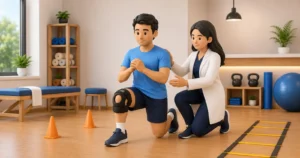
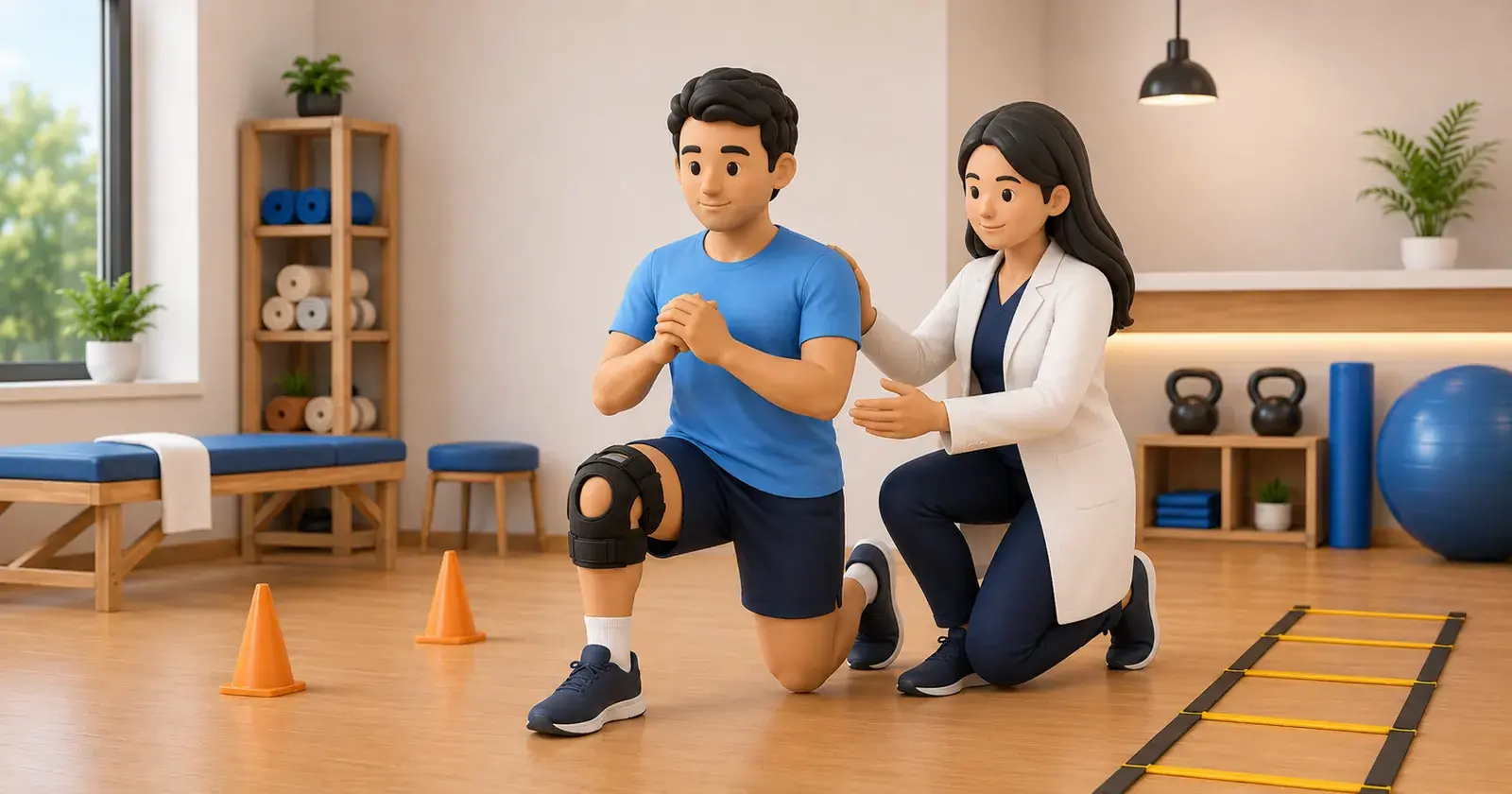
Once irritability settles, progressive loading begins. Calf raises with controlled lowering and lifting, step-downs, and split squats restore lower limb capacity for running and change of direction. For hamstrings, exercises like the Nordic curl start at low volume and progress as soreness allows. Around the knee, the quadriceps regain strength through leg presses or Spanish squats, while hip abductors and external rotators (think abduction while lying on your side and clamshells using resistance bands) help control knee valgus during landings. In the shoulder, rotator cuff external rotations, scapular retraction work, and weight shifts with the hands supported rebuild strength and stability for paddling and overhead sport.
Control matters as much as raw strength. Balance on one leg with perturbations, star excursion reaches, and tempo squats on one leg challenge proprioception and movement quality. The relationship here is direct: better control reduces joint stress during cutting, landing, and deceleration. Mobility work stays targeted. An ankle that lacks dorsiflexion forces the knee to collapse inward during a squat or landing, changing load at the knee and hip. Techniques for soft tissues, calf stretching, and joint mobilization combined with strength training restore range where it influences mechanics.
Clear, Testable Milestones for Running, Jumping, and Throwing
Criteria replace guesswork when you reintroduce 4. impact. Before running, you should walk briskly for 30 minutes without a pain flare, manage 20 to 30 consecutive calf raises on one leg at a steady tempo, and hop in place comfortably for sets of 20. A graded plan alternating running and walking follows, starting with short, even intervals. Cadence can be nudged up 5 to 10 percent to reduce stride length and peak joint load. For tendon pain, progress from isometrics to slow heavy resistance, then to exercises that store and release energy, like skipping and hops below maximum effort, before faster sprints and cutting.
Jump and hop testing gives objective checks. Single hop and triple hop for distance, timed hop tests, and lateral bounding compare limb symmetry. While exact thresholds vary by sport, approaching your numbers from before the injury and demonstrating smooth, controlled landings are key. The same logic applies to the upper body. Overhead athletes use a gradual throwing program with fixed distances and volume, adding longer throws or throws at higher intensity only when pain is stable, and strength and range meet targets. If available, handheld dynamometry quantifies rotator cuff strength and helps confirm readiness alongside functional tests like a stability test for the upper extremities with the hands supported.
How a Plan Plays Out in Real Life
Scenario 1: a weekend soccer player rolls an ankle. Week 1 focuses on swelling control, ankle pumps, and isometric peroneal work, plus bike sessions to keep conditioning. By weeks 2 to 3, they progress to heel raises off a step, resisted eversion, balance drills on a firm surface, and light jogging as pain allows. When they can complete hops on one leg without fear, handle star excursion reaches within a few centimeters of the uninjured side, and perform deceleration drills without pain, they reintroduce change of direction using cuts at 45 and 90 degrees before full games with fewer players on each side. The tradeoff to manage is bracing versus control. A brace with laces can help in the short term for confidence, but balance and strength work build stability over the longer term.
Scenario 2: a distance runner with nagging shin pain. Step one is to confirm it behaves like a bone stress reaction rather than simple muscle soreness, then strip impact briefly while keeping the aerobic engine with cycling or pool running. Calf strength and hip control improve in the meantime. Return to running starts with very short intervals alternating running and walking on forgiving surfaces, increasing total minutes first, then pace, and finally hills or speed work. The main pitfall is ramping up weekly volume and intensity at the same time. Keep one variable steady while the other climbs to prevent further irritation.
Staying Ready After You Are Back
Returning to competition is not the finish line. A small weekly dose of the exercises that fixed the problem usually keeps it fixed. Runners maintain calf and hip strength and include a brief plyometric block throughout the year. Athletes in field sports continue Copenhagen adduction and Nordic hamstring work to support cutting and sprinting. Overhead athletes keep rotator cuff external rotation and lower trap work in the rotation. Plan training with weeks of reduced load after heavy blocks and track your total volume so hard spikes are visible before they are felt.
Two constraints are easy to overlook. Sleep and fueling directly influence tissue recovery, tendon irritability, and decision-making on the field. Footwear and surface also shift load: a firmer shoe or surface increases impact rate, so adjust volume when you change either. Finally, imaging seldom changes daily management of most injuries involving soft tissues once red flags are ruled out. Lean on objective measures you can improve in the gym and on the field, and use them as your compass as you build back to the demands of your sport.
- https://grammarexparts.com/other-ways-to-say-please-accept-my-apology/
https://grammarexparts.com/other-ways-to-say-get-over-here/
https://grammarexparts.com/3d-scanning-or-photogrammetry-choosing-the-right-way-to-capture-reality/