Digital creativity is no longer limited to professional photographers, designers, or video production teams. Today, anyone with a computer or smartphone can create attractive visual content for websites, social media, online stores, and personal projects. However, producing high-quality images and videos still requires the right tools and a smooth working environment. Artificial intelligence is making this process easier by introducing intelligent editing features that reduce manual work and save valuable time.
An AI photo editor can help transform ordinary pictures into polished visuals, while a modern video enhancer can improve the appearance of recorded footage. At the same time, software solutions from IObit can help users maintain their computers so creative applications have a better environment in which to operate.
Why Visual Quality Matters in Digital Communication
Images and videos are often the first things people notice when visiting a website or scrolling through social media. A clear product photograph, attractive promotional graphic, or well-presented video can communicate information more effectively than a large amount of text.
For businesses, visual quality can influence how customers perceive a brand. Online retailers need detailed product pictures, while content creators depend on engaging visuals to maintain audience interest. Even students and professionals may need clear images and videos for presentations, educational materials, and reports.
Creating these visuals manually can take considerable effort. Fortunately, AI-powered technology is introducing practical ways to improve content without requiring advanced editing experience.
AI Photo Editing Makes Image Improvements Easier
Traditional image editing involves several adjustments, including exposure, contrast, color correction, cropping, and sharpening. Beginners may find these controls confusing, especially when they need to edit multiple pictures.
An AI photo editor simplifies many of these tasks by analyzing an image and suggesting or automatically applying suitable improvements. Depending on the software, users may be able to remove backgrounds, reduce unwanted noise, improve facial details, restore older photographs, and adjust image colors.
For example, imagine an online seller preparing product photographs for an upcoming promotional campaign. Some pictures may have inconsistent lighting, distracting backgrounds, or minor visual imperfections. Instead of editing every image manually, AI-assisted tools can help create a more consistent appearance.
Photographers can also use these features to improve pictures captured in challenging lighting conditions. However, automatic editing should not replace careful review. Applying too much sharpening or changing colors excessively can make an image look unnatural.
Practical Ways to Use AI Photo Editing
AI image technology is useful across several everyday activities.
Social Media Content: Creators can improve photographs before publishing them on Instagram, Facebook, or other platforms. Better lighting and balanced colors can make posts more attractive.
Product Photography: Online businesses can prepare cleaner product images by adjusting backgrounds and improving visibility.
Personal Memories: Older family photographs may benefit from restoration features that reduce visible imperfections and improve clarity.
Marketing Materials: Businesses can prepare promotional graphics and website visuals more efficiently.
Educational Projects: Students can improve illustrations, screenshots, and other visual materials used in presentations.
The most effective approach is to use AI as an assistant rather than allowing it to make every creative decision.
Give Old and Low-Quality Footage a Better Appearance
Video content has become a major part of online communication. Tutorials, product demonstrations, interviews, and short social media clips all depend on visual clarity. Unfortunately, not every recording is captured under ideal conditions.
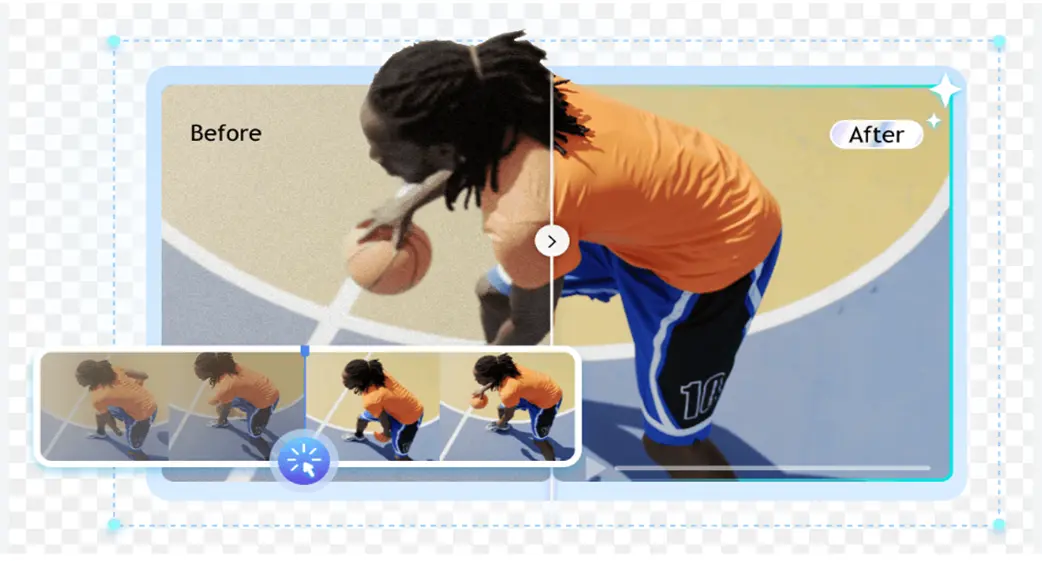
Poor lighting, camera movement, compression, and low resolution can make footage difficult to watch. A video enhancer can help address some of these problems through techniques such as noise reduction, sharpening, color adjustment, and resolution upscaling.
For example, a business owner might have an older product demonstration that contains useful information but looks outdated. Enhancement software may help improve its presentation before the footage is shared again.
Similarly, teachers can improve recorded lessons, while creators can prepare clearer clips for online audiences.
It is important to understand that enhancement has limitations. Software cannot always recover information that was never captured by the original camera. Therefore, users should compare the original recording with the enhanced version and avoid settings that introduce artificial-looking details.
How AI Video Enhancement Supports Content Creators
Video editing involves more than simply improving resolution. Creators also need to consider brightness, color consistency, background noise, and the overall appearance of their footage.
AI-assisted video tools can make certain adjustments faster. Some applications offer automatic scene analysis, facial enhancement, stabilization, or noise reduction, depending on their capabilities.
These features can be especially helpful for people who produce content regularly but have limited editing time.
A practical workflow might involve selecting the most useful recordings, improving their visual quality, reviewing individual scenes, and exporting the final version in a format suitable for the intended platform.
Before publishing, creators should check that the enhanced footage remains natural and that important details have not been distorted.
Where IObit Fits Into a Creative Computer Setup
Editing applications can place considerable demands on computer hardware. Large image files, high-resolution videos, and multiple running programs may consume significant memory and storage resources.
This is where IObit becomes relevant. Its software collection includes computer maintenance and optimization utilities that help users manage different aspects of their Windows systems.
For instance, Advanced SystemCare focuses on PC maintenance, while IObit Uninstaller helps remove unwanted applications and associated leftover files. Driver Booster is designed to identify outdated drivers and assist with updating them.
These tools serve a different purpose from dedicated photo and video editing applications. They do not replace an AI photo editor or video enhancer. Instead, they can help users maintain an organized computing environment for everyday creative activities.
Keeping unnecessary programs under control, maintaining adequate storage space, and checking important drivers can contribute to a more convenient computer experience.
Build a More Efficient Editing Workflow
Having powerful software is useful, but an organized workflow is equally important. Creators can save time by following a consistent process.
Start by organizing original photographs and video recordings into clearly named folders. Keep backup copies of important files before making major changes.
Next, identify which images need color correction, background removal, restoration, or other improvements. Use suitable AI editing features rather than applying every available effect.
For video projects, review the original footage first. Decide whether brightness adjustments, stabilization, sharpening, or noise reduction would provide meaningful improvements.
After editing, compare the final results with the original files. Check image proportions, video playback, audio quality, and export settings before sharing the content.
Finally, maintain your computer regularly. Removing applications you no longer need and keeping essential software updated can help create a more manageable working environment.
Choosing the Right Tools for Your Needs
Not every creator requires expensive professional software. The best solution depends on the type of content being produced, the available hardware, and the expected results.
Before selecting an AI photo editor, consider whether it supports the image formats you use and whether its editing features match your requirements. Look for practical options such as background removal, restoration, batch processing, and image enhancement.
When evaluating a video enhancer pay attention to supported resolutions, processing speed, stabilization options, and export quality.
For computer maintenance, explore IObit’s available utilities and check their system requirements, pricing, and features before installation.
Privacy should also remain a priority. Download applications from official sources, review permissions, and understand how your files and personal information are handled.
Final Thoughts
Creating professional-looking digital content is becoming more accessible as artificial intelligence continues to improve. An AI photo editor can simplify image adjustments, while a reliable video enhancer can help make recorded footage clearer and more presentable.
Meanwhile, IObit offers computer maintenance utilities that can support a more organized environment for creative work. Although system maintenance and visual editing are different tasks, combining suitable tools can make the overall production process more convenient.
Whether you are a beginner, online seller, student, or regular content creator, choosing software according to your actual needs can help you produce better digital content while spending less time on repetitive tasks.
- best-link-building-services-2026/
- why-game-audio-matters-more-than-you-think/
- what-to-do-when-you-fall-behind-in-an-online-course/