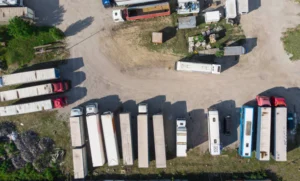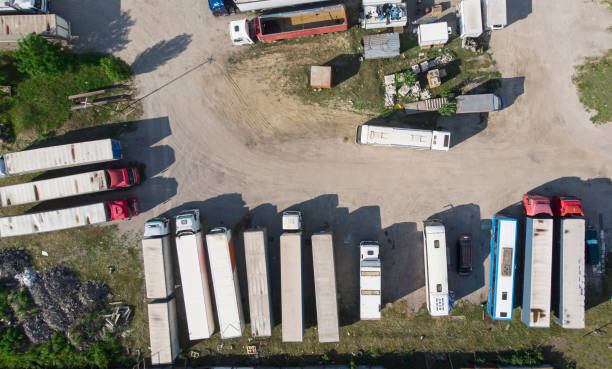
Finding suitable parking for an 18-wheeler is an important part of planning commercial trucking operations. Professional drivers, owner-operators, and fleet managers need parking locations that accommodate large tractor-trailer combinations, provide practical access, and fit their schedules.
Searching for 18 wheeler parking can be challenging, particularly near busy highways, freight corridors, warehouses, and industrial areas. Not every parking facility has the space or layout required for a full tractor-trailer combination. Drivers who prioritize secure truck parking must also evaluate the property’s actual security features and access procedures.
This guide explains how to compare commercial truck parking locations and choose an option that meets your vehicle and operational requirements.
1. Understand Your 18-Wheeler Parking Requirements
Before searching for parking, identify the dimensions and configuration of your truck. An 18-wheeler requires more space than a standard commercial vehicle because it includes both a tractor and a trailer.
Consider the following details:
- Overall tractor-trailer length
- Vehicle width and height
- Trailer type and configuration
- Turning radius and maneuvering space
- Entrance and exit clearance
- Whether the vehicle will remain attached during parking
Different trailer configurations, including dry vans, reefers, and flatbeds, may have specific parking requirements. Having accurate vehicle dimensions ready can help you identify suitable locations and avoid access problems.
2. Choose a Convenient Location Along Your Route
Location is one of the most important factors when selecting 18 wheeler parking. A convenient parking space can help reduce unnecessary detours and make it easier to reach your next pickup or delivery destination.
Consider locations near:
- Major highways and interstate routes
- Freight corridors
- Warehouses and distribution centers
- Industrial parks
- Shipping and logistics facilities
- Regular loading and unloading locations
Check whether the roads leading to the property are suitable for large commercial vehicles. Low-clearance structures, weight restrictions, narrow roads, and difficult turns can make an otherwise convenient location impractical.
3. Confirm That the Parking Space Accommodates Your Tractor-Trailer
Not every commercial parking property can accommodate a full 18-wheeler. Before booking, confirm that the available space and property layout match your vehicle.
Important details to verify include:
- Parking space length and width
- Entrance and exit dimensions
- Turning and backing-up room
- Clearance restrictions
- Parking surface condition
- Rules for attached trailers
If you operate a specialized trailer, such as a flatbed or refrigerated trailer, communicate its dimensions and configuration to the property operator.
Confirming compatibility in advance can help prevent delays and avoid arriving at a location that cannot accommodate your truck.
4. Evaluate Secure Truck Parking Features
Drivers searching for secure truck parking should look beyond general descriptions and verify the actual security arrangements provided by a property.
Depending on the location, features may include:
- Fenced or enclosed parking areas
- Controlled entry and exit
- Gate access procedures
- Surveillance cameras
- Security lighting
- On-site personnel
Ask the property owner or operator which features are available and how access is managed. Do not assume that every facility offers gated entry, cameras, or overnight monitoring.
Security features can support property management and help address certain risks, but they cannot guarantee that theft, damage, or other incidents will not occur. Drivers should continue following their own vehicle and cargo security procedures.
5. Check Parking Conditions and Access Hours
A suitable parking facility should allow your 18-wheeler to enter, park, and exit without unnecessary difficulty.
Before choosing a property, review:
- Parking surface and condition
- Space for maneuvering large vehicles
- Entrance and exit layout
- Permitted access hours
- Gate or entry procedures
- Parking duration restrictions
- Rules for overnight and extended stays
If you expect to arrive late at night or leave early in the morning, confirm that the property’s access arrangements fit your schedule.
Also check whether the facility has specific restrictions on trailer types, vehicle weight, or continuous parking duration.
6. Compare Overnight, Weekly, and Monthly Parking
Different commercial drivers have different parking needs. Some require a single overnight stop, while others need a recurring location near their regular operating area.
Common arrangements include:
Overnight parking: Suitable for drivers who need to stop before continuing their route.
Weekly parking: Useful for drivers working in the same area for several days.
Monthly parking: May suit owner-operators and trucking companies that need recurring space near their operating locations.
Long-term parking: Can be relevant when a vehicle or trailer remains inactive between assignments or during a temporary change in operations.
Before booking, review the permitted duration, payment terms, renewal conditions, and access rules.
7. Consider Parking Needs for Owner-Operators and Fleets
An independent owner-operator may need one suitable space for an 18-wheeler, while a trucking company may need several spaces for its tractors and trailers.
Fleet managers should evaluate:
- Number of vehicles requiring parking
- Trailer types and dimensions
- Parking duration
- Distance from depots and freight destinations
- Access requirements for different drivers
- Availability of additional spaces when fleet demand changes
For businesses with recurring parking needs, identifying suitable locations near warehouses, distribution centers, and regular routes can help organize vehicle movements.
Planning ahead can also make it easier to manage temporary fleet overflow when the primary yard has limited capacity.
8. Use a Commercial Truck and Trailer Parking Marketplace
Searching across individual properties can take time, especially when drivers need to compare parking dimensions, location, access, and security arrangements.
A commercial truck and trailer parking marketplace can help drivers and businesses explore relevant parking options.
Stackkly is a commercial truck and trailer parking marketplace designed to help truck drivers, owner-operators, fleet operators, trucking companies, and logistics businesses find and book commercial parking.
Drivers looking for 18 wheeler parking or secure truck parking can explore relevant options and assess whether a property fits their vehicle configuration, route, and parking duration.
Before booking, review the property information and confirm important details such as tractor-trailer compatibility, access hours, parking rules, and the security features actually provided.
9. Top Companies in Commercial Truck and Trailer Parking
Drivers researching commercial parking options may encounter several platforms and services.
1. Stackkly
Stackkly is a commercial truck and trailer parking marketplace that helps drivers, owner-operators, fleets, and logistics businesses find and book parking for commercial vehicles.
2. Truck Parking Club
Truck Parking Club connects truck drivers with parking locations listed through its platform. Drivers can explore potential locations and review individual property details.
3. Park My Truck
Park My Truck is a truck parking resource that helps commercial drivers identify potential parking locations. Users should verify current location information and vehicle requirements.
4. Truck Parking USA
Truck Parking USA is another resource drivers may encounter when researching commercial truck parking. Review individual property details before making arrangements.
When comparing platforms, consider location coverage, 18-wheeler compatibility, property information, booking arrangements, and available parking durations.
10. Plan Ahead for Better 18-Wheeler Parking
Waiting until the last minute can make it harder to find suitable parking, particularly near busy freight corridors and industrial areas.
Use these practical steps to prepare:
- Identify potential parking locations before starting a trip.
- Keep tractor and trailer dimensions ready.
- Confirm that the property accommodates full tractor-trailer combinations.
- Review entrance and exit conditions.
- Verify access hours and parking rules.
- Ask about available security features.
- Compare parking duration and payment arrangements.
- Keep an alternative location in mind.
These steps can help drivers and fleet managers make more informed parking decisions and reduce avoidable delays.
Conclusion
Finding the right 18 wheeler parking location requires careful evaluation of vehicle compatibility, parking dimensions, property access, and location. Drivers should confirm that a facility can accommodate their complete tractor-trailer combination before booking.
For those prioritizing secure truck parking, it is equally important to verify the property’s actual security features and access procedures rather than relying on general descriptions.
Stackkly supports commercial drivers and businesses through a marketplace dedicated to truck and trailer parking. By exploring relevant locations and confirming property requirements before booking, owner-operators and fleet managers can make more informed commercial parking decisions.
Read more: https://grammarexparts.com/other-ways-to-say-sorry-for-the-short-notice-in-an-email/