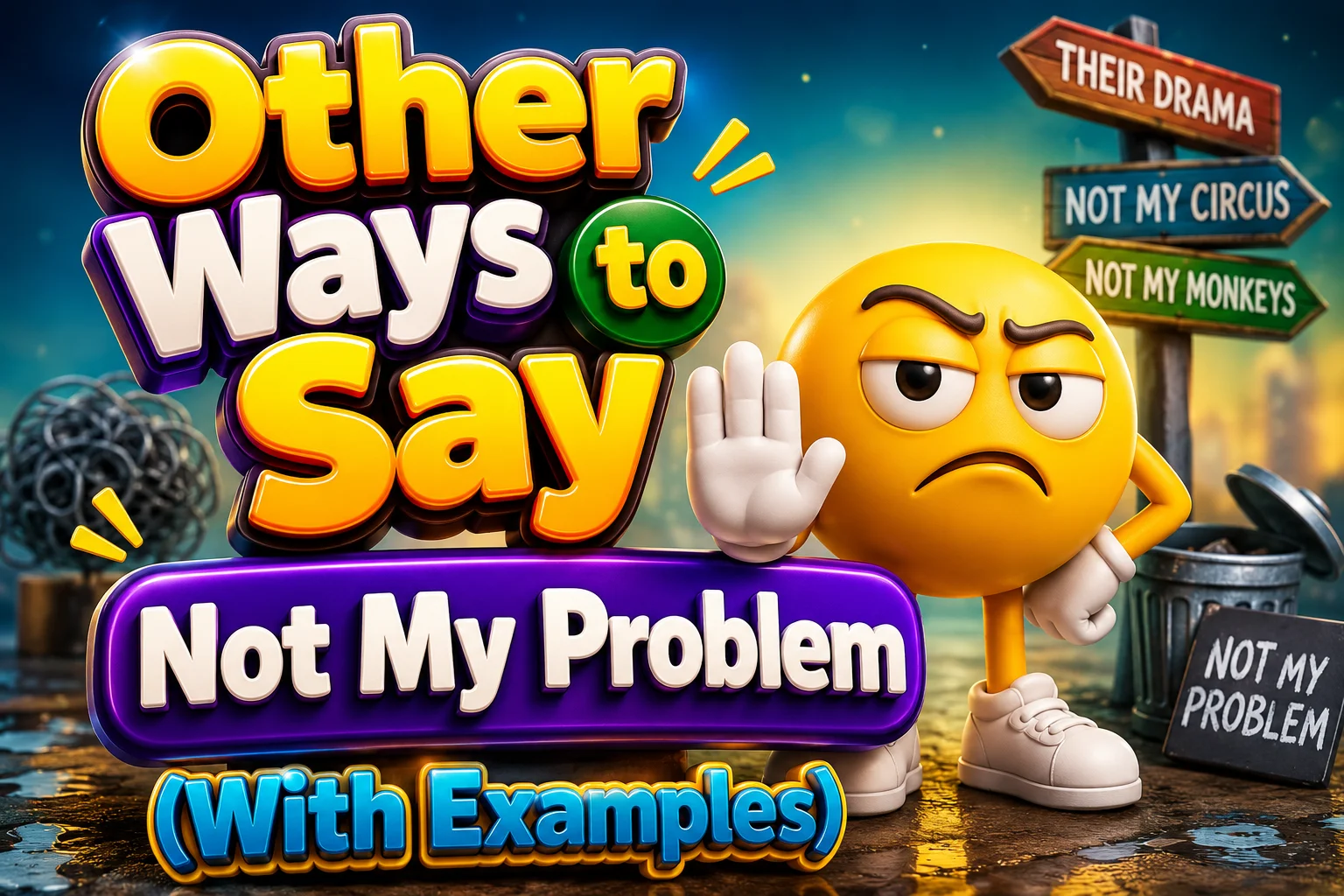
Other Ways to Say “Not My Problem” (With Examples) to communicate boundaries with clarity, respect, and professionalism in every setting.
The phrase not my problem can sometimes sound rude, dismissive, or unprofessional, even when someone simply wants to explain that a task or situation is outside their responsibility. From my experience, effective communication depends on choosing thoughtful alternatives that protect your role while maintaining positive relationships. In workplaces and daily conversations, using the right words helps create clarity, reduce conflict, and show respect for others.
This guide shares practical alternatives, explanations, and examples to help you express limits without sounding harsh or careless. Whether you are handling professional communication, teamwork, or personal discussions, the right phrasing allows you to explain your priorities, limitations, and responsibilities in a more diplomatic way. A balanced approach with politeness, empathy, and confidence helps others understand your position while keeping conversations productive. Choosing respectful language does not mean avoiding boundaries; it means delivering your message with consideration, awareness, and a tone that supports better understanding.
What Does “Not My Problem” Mean?
The phrase “Not My Problem” means that you are not responsible for dealing with a particular situation, task, or issue. People often use it when they believe something falls outside their duties, responsibilities, or personal concerns.
Benefits of Using “Not My Problem”
Using “Not My Problem” or one of its thoughtful alternatives can help you set clear boundaries and avoid taking responsibility for situations that aren’t yours to solve. It reminds others that everyone has their own roles and responsibilities.
Is It Professional/Polite to Say “Not My Problem”?
In most professional settings, “Not My Problem” is not considered polite because it may sound blunt, dismissive, or unwilling to help. Even if the issue truly isn’t your responsibility, the wording can leave a negative impression.
Why Choosing the Right Words Matters
The words we choose can greatly influence how others feel and respond to our messages. While “Not My Problem” may express that something is outside your responsibility, it can sometimes sound too direct or uncaring. Finding more thoughtful alternatives helps you communicate your boundaries while still showing respect, patience, and understanding.
1. That’s Outside My Responsibility
Meaning
This phrase means the task or issue does not fall within your assigned duties or obligations.
Examples
- That’s outside my responsibility, so the operations team can assist you better.
- I understand your concern, but that’s outside my responsibility at work today.
- That request falls outside my responsibility and requires another department’s approval first.
- Unfortunately, that’s outside my responsibility, but someone else can certainly help you.
- This matter is outside my responsibility, so please contact the appropriate representative.
Tone
Professional, respectful, and firm.
Explanation
This expression politely communicates that a responsibility belongs elsewhere while maintaining professionalism. It sets healthy boundaries without sounding dismissive, making conversations more respectful and cooperative.
Best Use For
Workplace emails, customer service, business discussions, and professional conversations.
2. I’m Not the Right Person for This
Meaning
This phrase means you are not the appropriate person to handle or solve the particular issue.
Examples
- I’m not the right person for this, but our manager can assist you.
- Sorry, I’m not the right person for this particular request right now.
- I’m not the right person for this, so please contact customer support instead.
- You’ll receive better guidance because I’m not the right person for this.
- I’m not the right person for this matter, but I’ll direct you accordingly.
Tone
Helpful, polite, and cooperative.
Explanation
Rather than refusing outright, this phrase gently redirects someone toward the appropriate person. It shows willingness to help while honestly acknowledging your own limitations and responsibilities.
Best Use For
Office communication, client interactions, customer support, and team collaboration.
3. This Falls Outside My Role
Meaning
It means the request is beyond the duties or expectations associated with your position.
Examples
- This falls outside my role, so another department should handle your request.
- Although I understand, this falls outside my role within the organization today.
- This falls outside my role and requires approval from senior management instead.
- Unfortunately, this falls outside my role, but I can guide you further.
- That responsibility falls outside my role and belongs to another team member.
Tone
Professional, neutral, and respectful.
Explanation
Using this phrase clearly explains that your job responsibilities don’t include the requested task. It keeps the conversation courteous while preventing misunderstandings about your professional role.
Best Use For
Business meetings, workplace discussions, and formal emails.
4. You’ll Need to Speak with Someone Else
Meaning
This expression means another person is better qualified or responsible for helping with the situation.
Examples
- You’ll need to speak with someone else regarding billing questions and account changes.
- For technical issues, you’ll need to speak with someone else on our team.
- You’ll need to speak with someone else because I don’t manage this process.
- You’ll need to speak with someone else for approval before moving forward today.
- I recommend you’ll need to speak with someone else about this specific request.
Tone
Friendly, helpful, and courteous.
Explanation
Instead of ending the conversation abruptly, this alternative points the person toward someone who can actually help. It sounds considerate while making your boundaries clear and understandable.
Best Use For
Customer service, office conversations, and support requests.
5. I’m Unable to Help with That
Meaning
This phrase means you cannot provide assistance because the matter is beyond your responsibility or ability.
Examples
- I’m unable to help with that because another department manages those requests.
- Unfortunately, I’m unable to help with that specific issue at this time.
- I’m unable to help with that, but customer support will gladly assist you.
- I’m unable to help with that since it’s outside my assigned responsibilities.
- At the moment, I’m unable to help with that particular request directly.
Tone
Polite, empathetic, and professional.
Explanation
This expression softens a refusal by focusing on your inability rather than rejecting the person’s request. It sounds respectful and compassionate while still communicating clear limitations and expectations.
Best Use For
Professional emails, customer support, workplace conversations, and formal requests.
6. That’s Beyond My Scope
Meaning
This phrase means the matter goes beyond your assigned responsibilities, authority, or area of expertise.
Examples
- That’s beyond my scope, so our supervisor should handle your request instead.
- I’m sorry, that’s beyond my scope of responsibilities within this department today.
- That decision is beyond my scope and requires management approval before proceeding.
- Unfortunately, that’s beyond my scope, but I can recommend the right contact.
- This issue is beyond my scope and should be reviewed by specialists.
Tone
Professional, respectful, and confident.
Explanation
This alternative politely explains that the request exceeds your responsibilities or authority. It maintains professionalism while setting clear expectations and encouraging the person to seek appropriate assistance.
Best Use For
Business communication, corporate settings, management discussions, and customer support.
7. I Can’t Assist with This Matter
Meaning
This phrase means you are unable to provide help because the matter isn’t within your responsibility or capability.
Examples
- I can’t assist with this matter because another department manages these requests.
- Unfortunately, I can’t assist with this matter at the present time.
- I can’t assist with this matter, but I know who can help.
- I’m afraid I can’t assist with this matter due to company policy.
- I can’t assist with this matter since it falls outside my responsibilities.
Tone
Courteous, formal, and understanding.
Explanation
This expression declines a request in a respectful manner without sounding dismissive. It communicates your limitations while preserving a positive and cooperative relationship with the other person.
Best Use For
Formal emails, workplace conversations, customer service, and business correspondence.
8. This Should Be Directed Elsewhere
Meaning
It means the request should be sent to another person, department, or organization better equipped to handle it.
Examples
- This should be directed elsewhere because our team doesn’t manage those services.
- I believe this should be directed elsewhere for a quicker resolution today.
- This should be directed elsewhere since another office handles these applications.
- Your request should be directed elsewhere to receive the correct assistance promptly.
- This issue should be directed elsewhere for proper review and approval.
Tone
Professional, neutral, and helpful.
Explanation
Rather than refusing responsibility outright, this phrase gently redirects the request. It encourages efficient problem-solving while maintaining a respectful and cooperative tone throughout the conversation.
Best Use For
Customer support, administrative work, office communication, and formal requests.
9. Someone Else Handles That
Meaning
This phrase means another individual or department is responsible for managing the issue or task.
Examples
- Someone else handles that, so please contact the finance department directly today.
- I’m sorry, someone else handles that within our organization and can assist.
- Someone else handles that because it’s outside my assigned responsibilities here.
- For account concerns, someone else handles that and will help you promptly.
- Someone else handles that, and they’ll provide the correct information immediately.
Tone
Friendly, direct, and informative.
Explanation
This alternative clearly identifies that responsibility belongs to another person. It avoids sounding rude while helping the other person understand where they should seek assistance.
Best Use For
Office conversations, customer service, reception desks, and team environments.
10. I Don’t Have Authority Over That
Meaning
This phrase means you do not have the power or permission to make decisions regarding the issue.
Examples
- I don’t have authority over that, so management must make the decision.
- Unfortunately, I don’t have authority over that particular policy or procedure today.
- I don’t have authority over that, but I’ll notify the appropriate manager.
- That request requires approval because I don’t have authority over that matter.
- I don’t have authority over that decision within this department currently.
Tone
Professional, honest, and respectful.
Explanation
This phrase explains that the limitation is based on authority rather than willingness. It reassures others that you’re being transparent while directing them toward the appropriate decision-maker.
Best Use For
Management discussions, corporate emails, workplace communication, and customer service.
11. That’s Not Within My Area of Responsibility
Meaning
This phrase means the matter does not belong to your assigned duties or job responsibilities.
Examples
- That’s not within my area of responsibility, so another team will assist you.
- Unfortunately, that’s not within my area of responsibility at this organization today.
- That’s not within my area of responsibility and requires management’s attention instead.
- I understand your concern, but that’s not within my area of responsibility.
- That’s not within my area of responsibility, though I can suggest who helps.
Tone
Professional, respectful, and clear.
Explanation
This phrase politely explains that the issue belongs to someone else’s responsibilities. It helps establish professional boundaries while remaining courteous and offering clarity about your role.
Best Use For
Business emails, workplace discussions, customer support, and formal communication.
12. You’ll Need to Contact the Appropriate Person
Meaning
This phrase means another individual is responsible for addressing the issue or request.
Examples
- You’ll need to contact the appropriate person for further assistance with this matter.
- Please contact the appropriate person because they manage this entire process directly.
- You’ll need to contact the appropriate person to receive official approval today.
- For account concerns, you’ll need to contact the appropriate person immediately.
- You’ll need to contact the appropriate person for accurate information and guidance.
Tone
Helpful, polite, and professional.
Explanation
Instead of simply refusing assistance, this expression directs someone toward the correct resource. It keeps the interaction positive while ensuring the issue reaches the right person.
Best Use For
Customer service, office communication, technical support, and professional correspondence.
13. I Can’t Take Ownership of This
Meaning
This phrase means you cannot accept responsibility for managing or resolving the situation.
Examples
- I can’t take ownership of this because another department manages the project.
- Unfortunately, I can’t take ownership of this particular issue right now.
- I can’t take ownership of this without approval from senior management first.
- I can’t take ownership of this, but I’ll point you correctly.
- I can’t take ownership of this since it isn’t assigned to me.
Tone
Professional, responsible, and respectful.
Explanation
This phrase makes it clear that responsibility lies elsewhere while remaining cooperative. It communicates accountability without accepting duties that belong to another individual or department.
Best Use For
Project management, workplace conversations, and corporate communication.
14. This Isn’t Something I Can Resolve
Meaning
This phrase means you are unable to solve the issue because it requires someone else’s authority or expertise.
Examples
- This isn’t something I can resolve without management reviewing the entire situation first.
- Unfortunately, this isn’t something I can resolve on my own today.
- This isn’t something I can resolve because another department handles these cases.
- This isn’t something I can resolve, but I’ll recommend the right contact.
- I’m sorry, this isn’t something I can resolve at this time.
Tone
Empathetic, professional, and honest.
Explanation
This alternative expresses your limitations without sounding dismissive. It reassures the other person that the issue matters while explaining why someone else must handle it.
Best Use For
Customer support, workplace discussions, complaint handling, and formal conversations.
15. I’m Afraid I Can’t Help with That
Meaning
This phrase means you politely express that you’re unable to assist with the request or situation.
Examples
- I’m afraid I can’t help with that because it’s outside my responsibilities today.
- I’m afraid I can’t help with that, but another colleague certainly can.
- Unfortunately, I’m afraid I can’t help with that particular request right now.
- I’m afraid I can’t help with that since company policy prevents it.
- I’m afraid I can’t help with that, though I’d gladly guide you.
Tone
Polite, empathetic, and considerate.
Explanation
This phrase softens a refusal by expressing regret before declining assistance. It helps maintain goodwill, shows empathy, and makes your response feel much more courteous and respectful.
Best Use For
Professional emails, customer service, workplace conversations, and polite everyday communication.
16. This Needs to Be Handled by Another Team
Meaning
This phrase means the issue belongs to a different team or department with the proper responsibility and expertise.
Examples
- This needs to be handled by another team with specialized knowledge and experience.
- I’m sorry, this needs to be handled by another team within our company.
- This needs to be handled by another team for faster and accurate resolution.
- Your request needs to be handled by another team before any action begins.
- This needs to be handled by another team because they oversee this process.
Tone
Professional, informative, and respectful.
Explanation
This expression clearly explains that another department is responsible for resolving the issue. It sounds cooperative while guiding the person toward the appropriate team for assistance.
Best Use For
Corporate communication, customer support, workplace discussions, and service requests.
Also Read This : 25 Other Ways to Say “Happy Sabbath” (With Examples)
17. I Don’t Have Control Over This Situation
Meaning
This phrase means you are not responsible for making decisions or influencing the outcome of the matter.
Examples
- I don’t have control over this situation, so management must review everything first.
- Unfortunately, I don’t have control over this situation at the present time.
- I don’t have control over this situation, but I’ll share your concerns promptly.
- I don’t have control over this situation because another department decides everything.
- I’m sorry, I don’t have control over this situation or its outcome.
Tone
Honest, empathetic, and professional.
Explanation
This phrase explains that your inability to help comes from limited authority rather than unwillingness. It reassures others while setting realistic expectations about what you can do.
Best Use For
Customer service, workplace conversations, formal emails, and conflict resolution.
18. That’s for Someone Else to Decide
Meaning
This phrase means the decision must be made by another person with the proper authority.
Examples
- That’s for someone else to decide after reviewing all the necessary information carefully.
- I’m afraid that’s for someone else to decide within our management team.
- That’s for someone else to decide because I don’t approve these requests directly.
- Ultimately, that’s for someone else to decide according to company policies.
- That’s for someone else to decide after completing the required evaluation process.
Tone
Respectful, neutral, and professional.
Explanation
This expression avoids taking responsibility for decisions outside your authority. It communicates honesty while encouraging the other person to seek approval from the correct decision-maker.
Best Use For
Business meetings, management discussions, approval requests, and workplace communication.
19. I’m Not Involved in That Process
Meaning
This phrase means you do not participate in or manage the specific procedure or responsibility.
Examples
- I’m not involved in that process, so another colleague can assist you better.
- Unfortunately, I’m not involved in that process within our department currently.
- I’m not involved in that process because another team oversees every stage.
- I’m sorry, I’m not involved in that process or related decisions.
- I’m not involved in that process, but I’ll direct you appropriately today.
Tone
Polite, informative, and professional.
Explanation
This phrase clarifies that you are not part of the workflow responsible for the issue. It keeps expectations realistic while maintaining a courteous and helpful tone.
Best Use For
Office communication, customer support, project coordination, and business conversations.
20. You’ll Get Better Help from Someone Else
Meaning
This phrase means another person is more qualified or better equipped to provide assistance.
Examples
- You’ll get better help from someone else with expertise in this particular matter.
- I’m confident you’ll get better help from someone else on our support team.
- You’ll get better help from someone else because they manage these requests daily.
- For faster assistance, you’ll get better help from someone else in operations.
- You’ll get better help from someone else who specializes in this service area.
Tone
Friendly, supportive, and encouraging.
Explanation
Rather than simply declining a request, this alternative focuses on helping the person find the best source of assistance. It sounds positive, considerate, and genuinely helpful.
Best Use For
Customer service, workplace discussions, professional emails, and everyday conversations.
21. That Isn’t My Decision to Make
Meaning
This phrase means you are not the person responsible for making the final decision.
Examples
- That isn’t my decision to make, so management will review it carefully first.
- I’m sorry, that isn’t my decision to make within this department today.
- That isn’t my decision to make because company policies require executive approval.
- Unfortunately, that isn’t my decision to make, but I’ll inform the supervisor.
- That isn’t my decision to make, so please contact the project manager directly.
Tone
Professional, respectful, and honest.
Explanation
This expression clearly communicates that decision-making authority belongs to someone else. It helps avoid misunderstandings while maintaining professionalism and showing respect for organizational responsibilities.
Best Use For
Management discussions, workplace communication, approval requests, and professional emails.
22. I Don’t Manage That Area
Meaning
This phrase means you are not responsible for overseeing or supervising that department, function, or task.
Examples
- I don’t manage that area, so our supervisor can better assist you today.
- Unfortunately, I don’t manage that area within the organization at this time.
- I don’t manage that area because another department oversees those responsibilities completely.
- I’m sorry, I don’t manage that area, but I’ll guide you correctly.
- I don’t manage that area, so please contact the responsible team directly.
Tone
Professional, courteous, and informative.
Explanation
This alternative politely explains that the responsibility belongs to another department or manager. It provides clarity while maintaining a helpful and respectful attitude throughout the conversation.
Best Use For
Office conversations, business communication, customer support, and administrative matters.
23. This Is Outside My Expertise
Meaning
This phrase means the issue requires knowledge or skills beyond your experience or qualifications.
Examples
- This is outside my expertise, so a specialist should review your request carefully.
- I’m afraid this is outside my expertise, but our expert can help.
- This is outside my expertise because it involves advanced technical requirements today.
- Unfortunately, this is outside my expertise, though I’ll recommend the right professional.
- This is outside my expertise and should be handled by qualified personnel.
Tone
Humble, honest, and professional.
Explanation
Using this phrase acknowledges your limitations without sounding negative. It demonstrates honesty and encourages the person to seek assistance from someone with the appropriate expertise.
Best Use For
Technical support, healthcare, legal matters, consulting, and professional environments.
24. I’m Not Responsible for That Matter
Meaning
This phrase means the issue or responsibility belongs to someone else rather than you.
Examples
- I’m not responsible for that matter, so another representative can assist you.
- Unfortunately, I’m not responsible for that matter within our department currently.
- I’m not responsible for that matter because another team handles these requests.
- I’m sorry, I’m not responsible for that matter, but I’ll redirect you.
- I’m not responsible for that matter under our current organizational structure today.
Tone
Direct, professional, and respectful.
Explanation
This phrase firmly states that the responsibility belongs elsewhere while remaining courteous. It establishes clear boundaries without appearing rude or dismissive during professional interactions.
Best Use For
Formal emails, workplace discussions, customer service, and business correspondence.
25. You’ll Need to Address This with the Correct Department
Meaning
This phrase means the issue should be taken to the department responsible for handling it.
Examples
- You’ll need to address this with the correct department for immediate assistance today.
- Please address this with the correct department because they manage these requests.
- You’ll need to address this with the correct department before any approval begins.
- I’m sorry, you’ll need to address this with the correct department directly.
- You’ll need to address this with the correct department for accurate guidance and support.
Tone
Professional, helpful, and courteous.
Explanation
This expression politely redirects the person to the appropriate department instead of simply declining responsibility. It promotes efficient communication while maintaining a respectful and customer-focused approach.
Best Use For
Corporate communication, customer service, government offices, technical support, and administrative requests.
FAQs
1. What is a polite way to say “Not My Problem”?
A polite way to say “Not My Problem” includes phrases like “That’s outside my responsibility,” “I’m not the right person for this,” or “I believe someone else can help you better.” These alternatives sound more respectful and professional.
2. Is saying “Not My Problem” considered rude?
Yes, “Not My Problem” can often sound rude because it may appear dismissive or unwilling to help. Choosing a softer alternative can communicate the same message while showing respect and understanding.
3. What can I say instead of “Not My Problem” at work?
In professional settings, you can say “This falls outside my role,” “I don’t have authority over that,” or “You’ll need to speak with the appropriate person.” These phrases maintain professionalism.
4. How can I set boundaries without sounding rude?
You can set boundaries by using clear but respectful language. Explain your limitations, offer guidance when possible, and direct the person toward someone who can provide better assistance.
5. What is the best alternative to “Not My Problem” in an email?
The best email alternatives include “I’m unable to assist with this matter,” “This is outside my area of responsibility,” or “This request would be better handled by another team.” These phrases sound professional and courteous.
Conclusion
Finding the right words to replace “Not My Problem” can make your communication more respectful, professional, and thoughtful. While setting boundaries is important, the way you express those boundaries can influence how others understand and respond to your message.Using alternatives like “That’s outside my responsibility,” “I’m not the right person for this,” or “You’ll need to contact the appropriate person” allows you to communicate clearly without sounding harsh or uncaring. These phrases help you protect your time, maintain professionalism, and build stronger relationships through polite and effective communication.






![Gavin Casalegno Ethnicity, Italian Heritage, and Acting Career [2026]](https://grammarexparts.com/wp-content/uploads/2026/09/gavin-casalegno-ethnicity-italian-heritage-and-acting-career-2026-300x169.webp)